Skip to main content
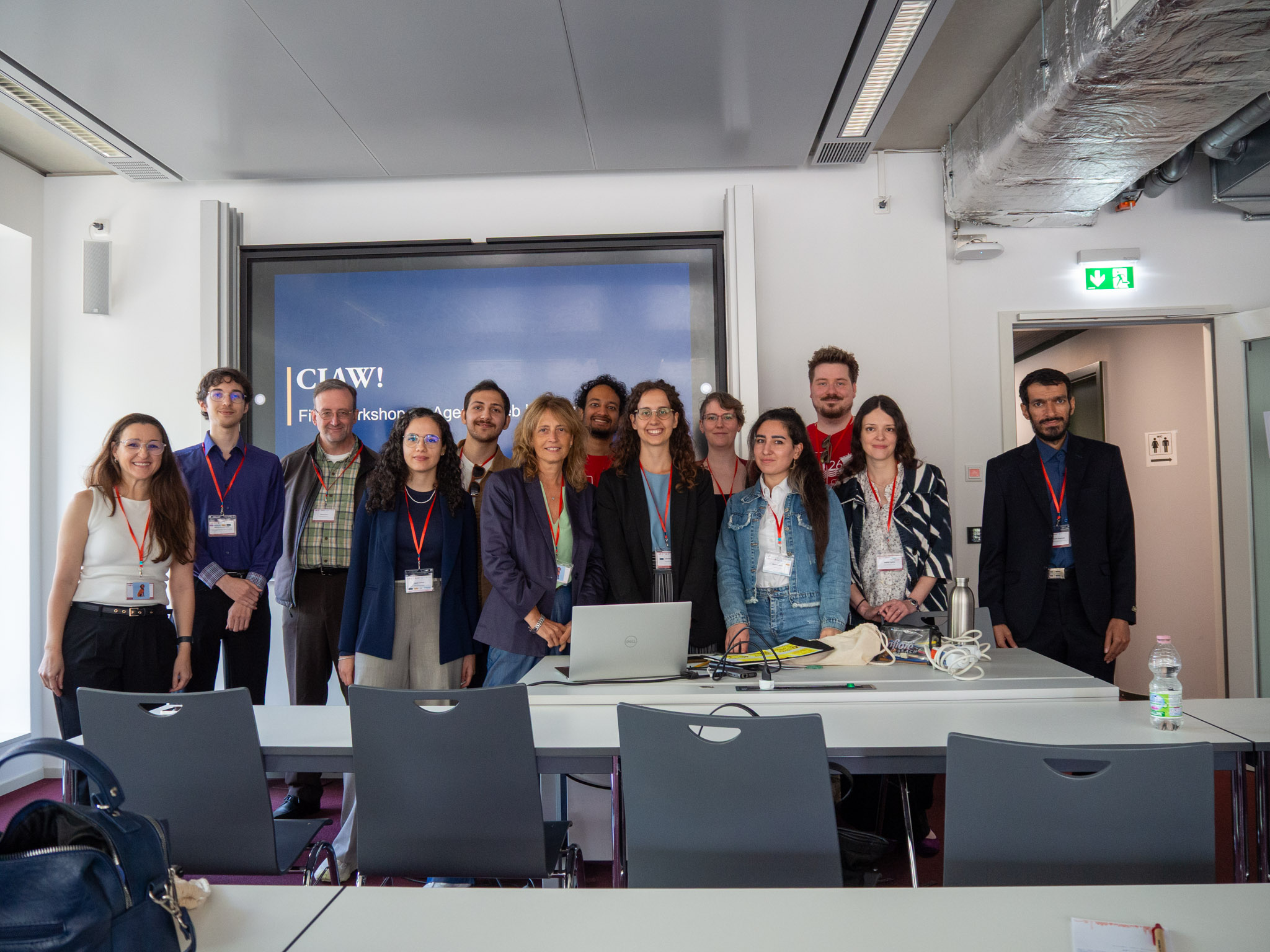
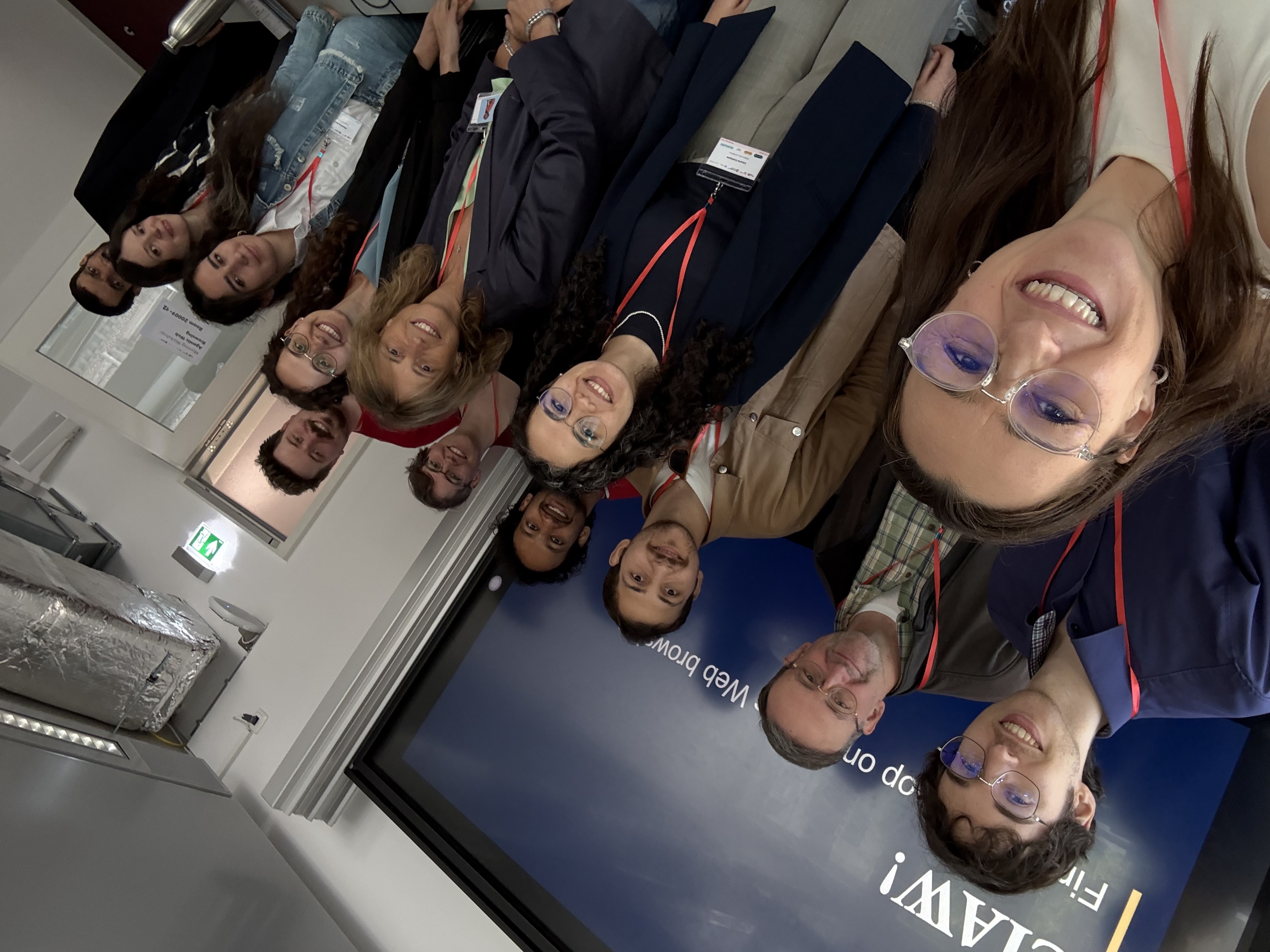
Participants of the CIAW workshop at CUI 2026, Bremen — July 2026.
Accepted papers, group activities and a look back at the day
Workshop outcomes
The Workshop on Conversational Interfaces for Agentic Web Browsing (CIAW) brought together
researchers and practitioners from HCI, AI, and accessibility to explore how conversational
agents can support complex web browsing tasks. Held as a half-day in-person event at
CUI 2026 in Bremen, the workshop was an occasion to share ideas on this rising interaction paradigm.
Through group discussions and a collaborative storyboarding
activity, participants discussed in groups challenges and gaps in the design of conversational interaction in agentic web browsing and envisioned future interaction scenarios. This page collects the accepted papers and the
outcomes produced during the day.
Published research
Accepted Papers
The following position papers were accepted. Each paper is available to read online and download as a PDF.
“Zooming In” on AgenticWeb Browsers as Assistive Technologies: A Case Study with a Low-Vision Technology Expert
These artifacts were produced during the storyboarding activity. Working in groups, participants reflected on current gaps in conversational interaction in agentic web browsing and produced storyboards illustrating a scenario in which an agent or user accomplishes a task on the web. To frame the activity, each group selected three components — a challenge, a theme, and a context — drawn from the workshop presentation and plenary discussion.
Each participant first developed an individual storyboard around the group's chosen components; the group then discussed their drafts collectively and produced a shared storyboard. In a final refinement step, groups revisited their storyboard through the lens of at least two of the following dimensions: privacy and data handling, trust and transparency, accessibility, user autonomy and control, system accountability and permissions, and usability.
The outputs below reflect the range of perspectives represented at the workshop and offer inspiration for future research.
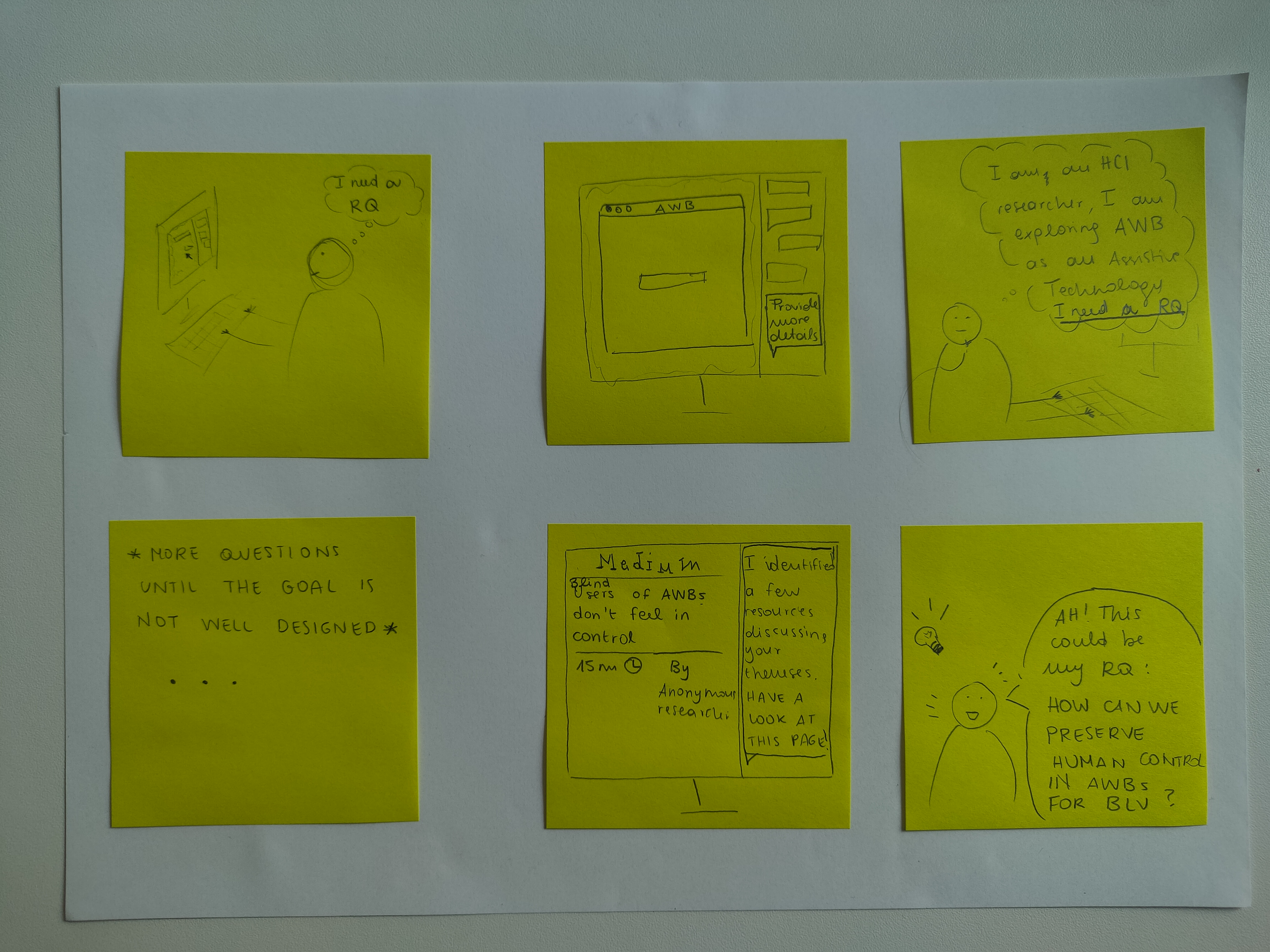
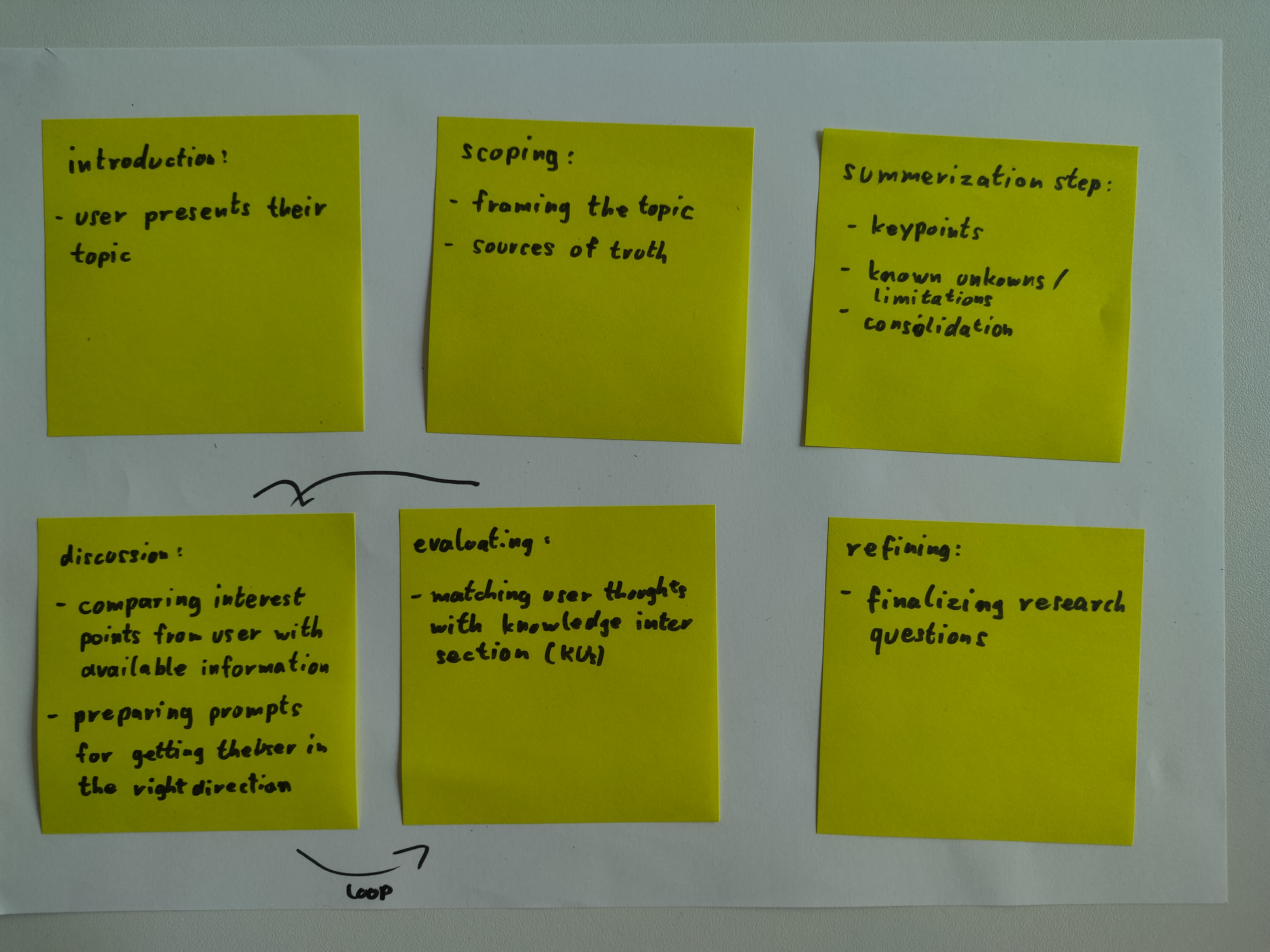
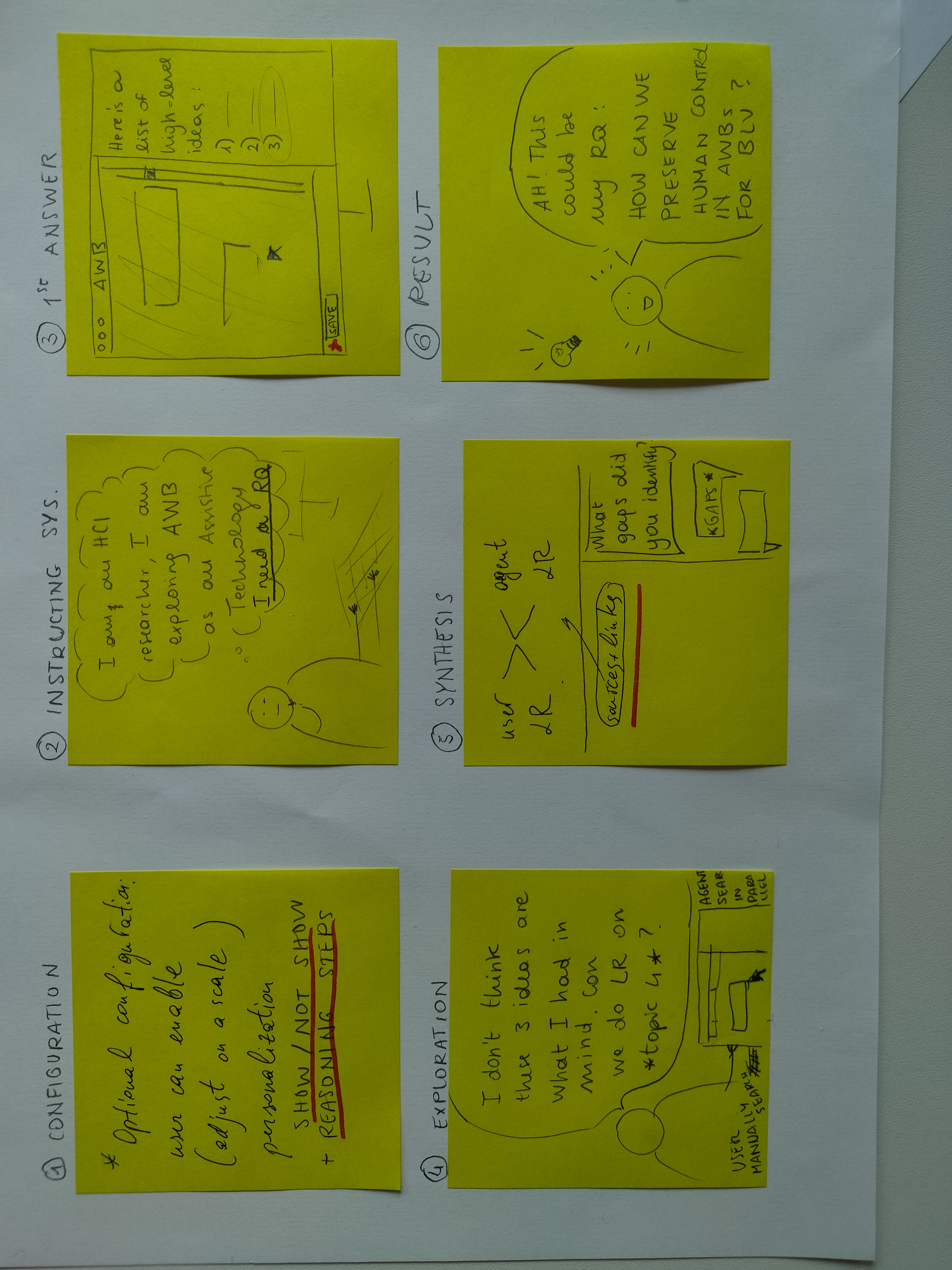
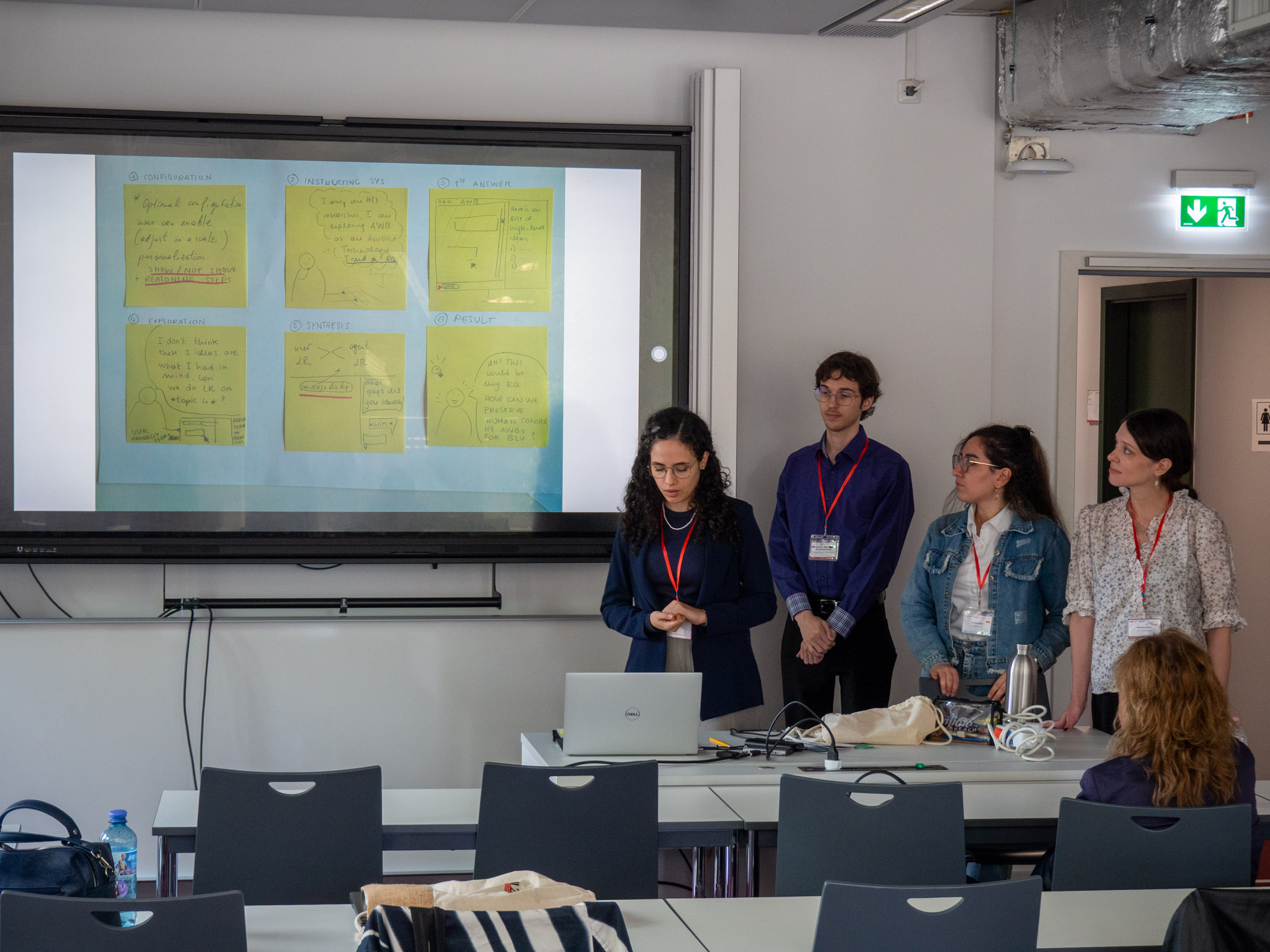
Group 1 focused on the theme of "Interaction models for the agentic web", in the context of education, and around the challenge of ensuring user agency,
Their storyboard depicted a scenario where their user, an HCI researcher, uses an agentic web browser to brainstorm their research question. Before starting the interaction, they can configure whether having visible the agent's reasoning steps. While interacting the user works in parallel with the system, both proposing options and looking for sources. At the end, the sources identified by both are syntesized in gaps and the user finds their research question. In the second refinement, this group focused on the dimensions of privacy, user control, and trust and transparency.
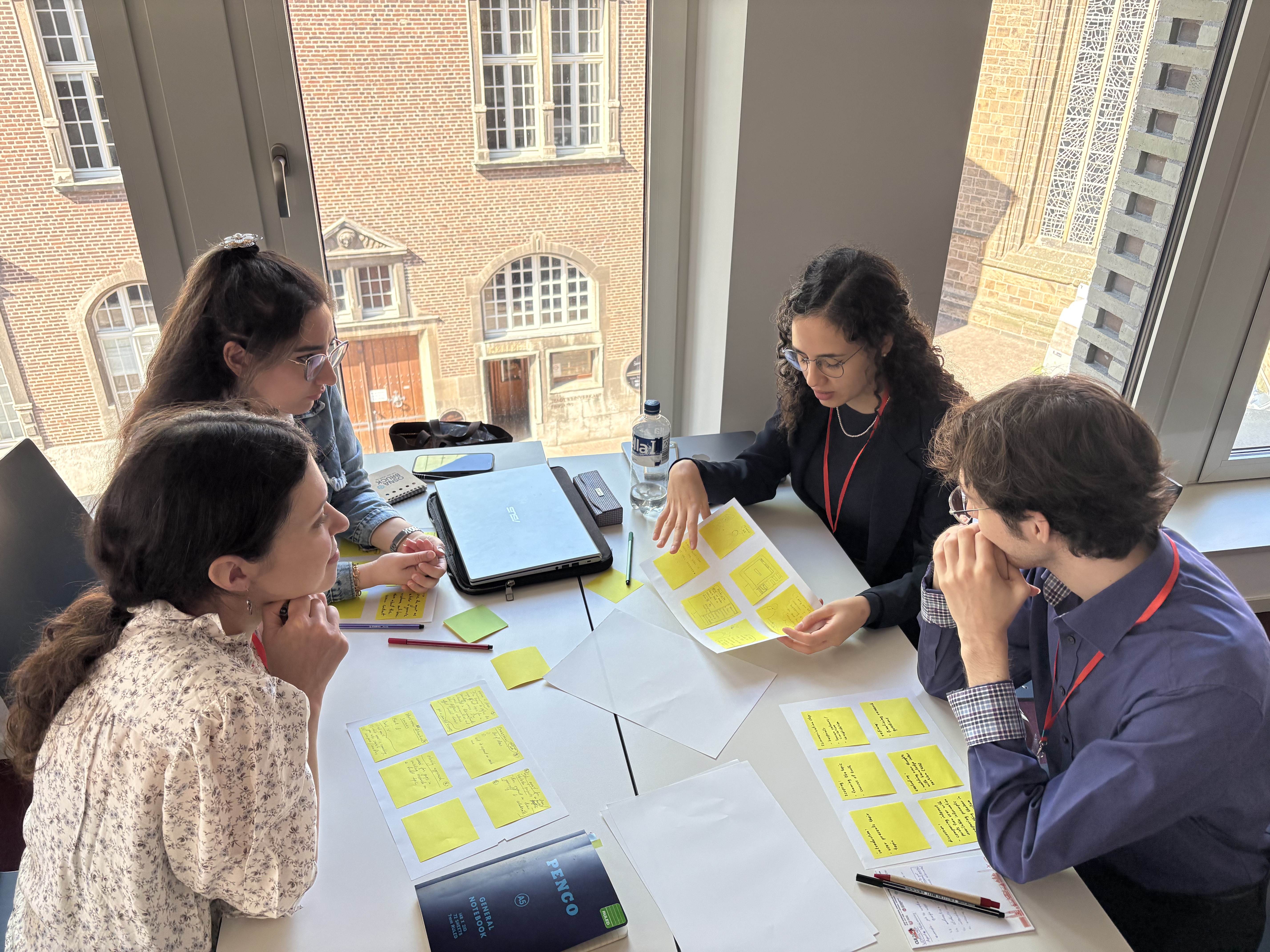
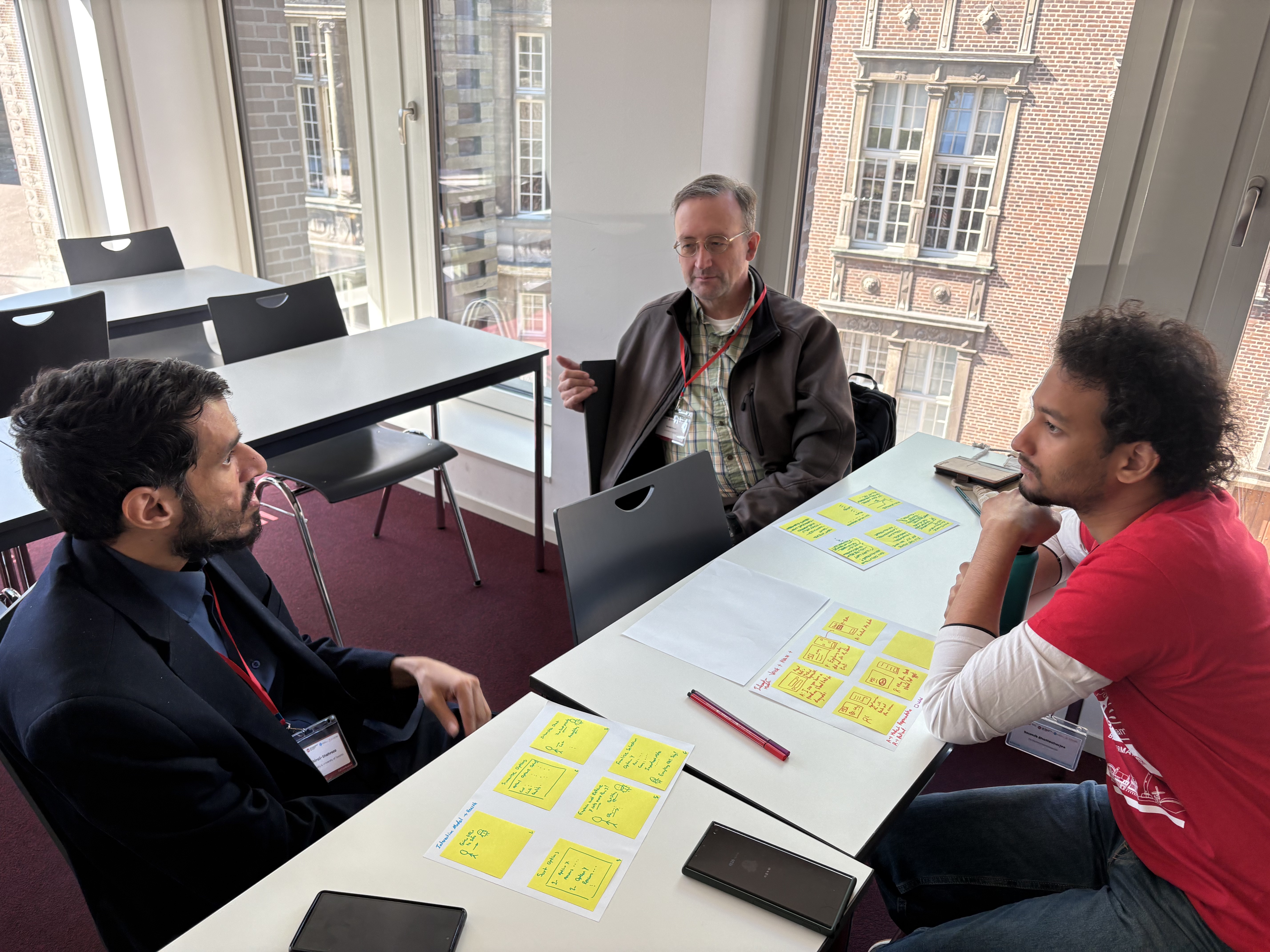
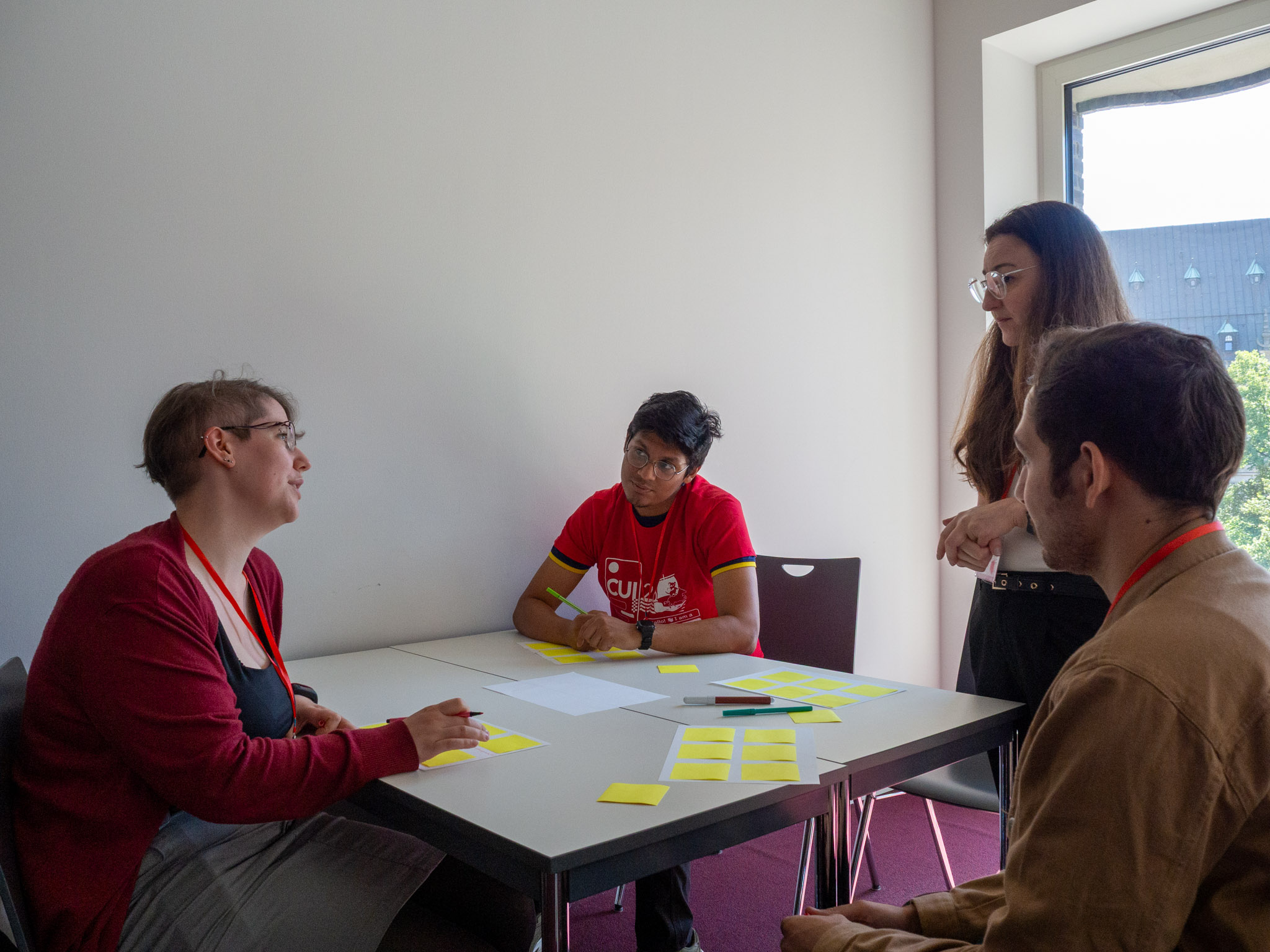
Participants discussing their individual storyboards
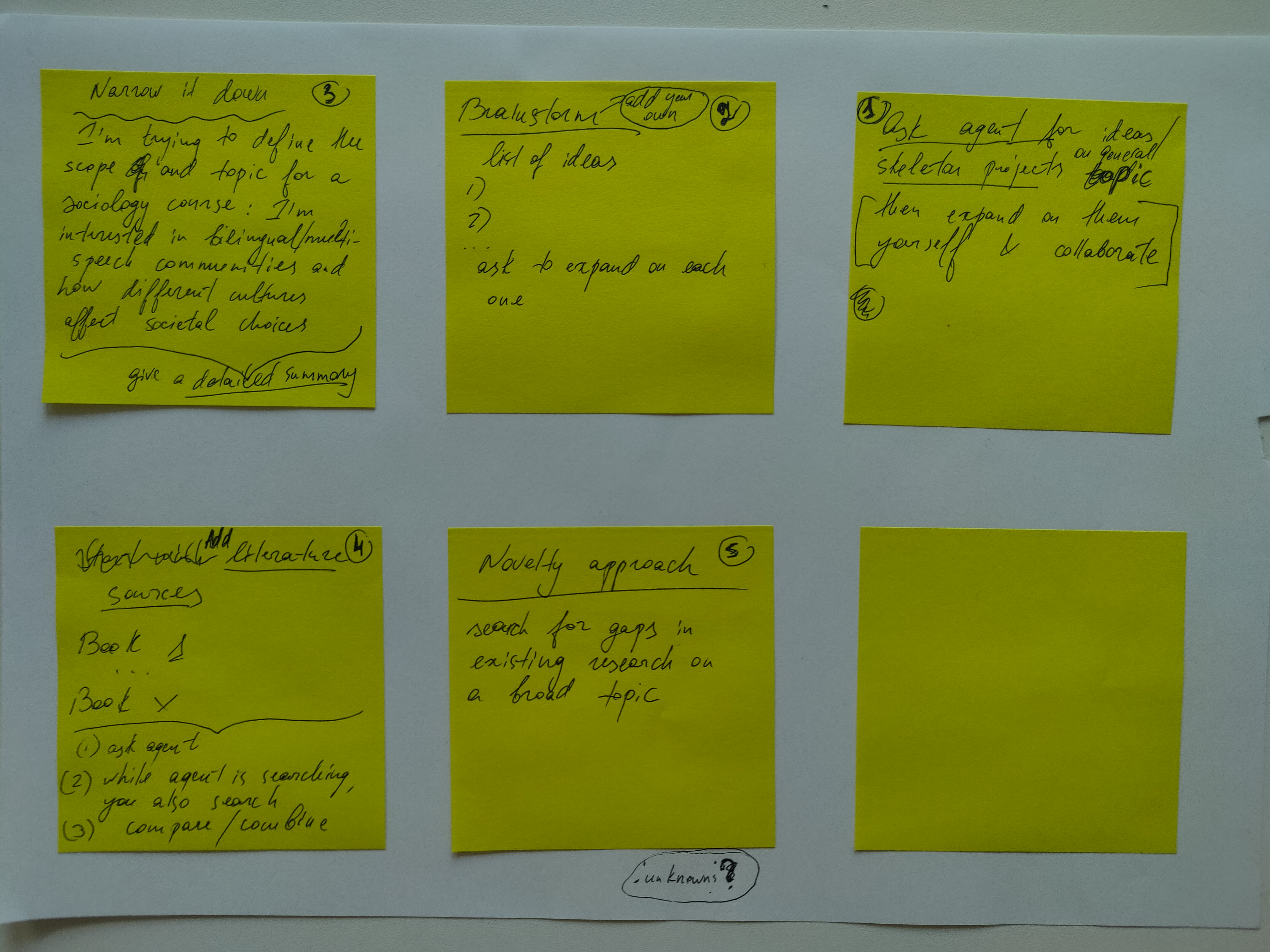
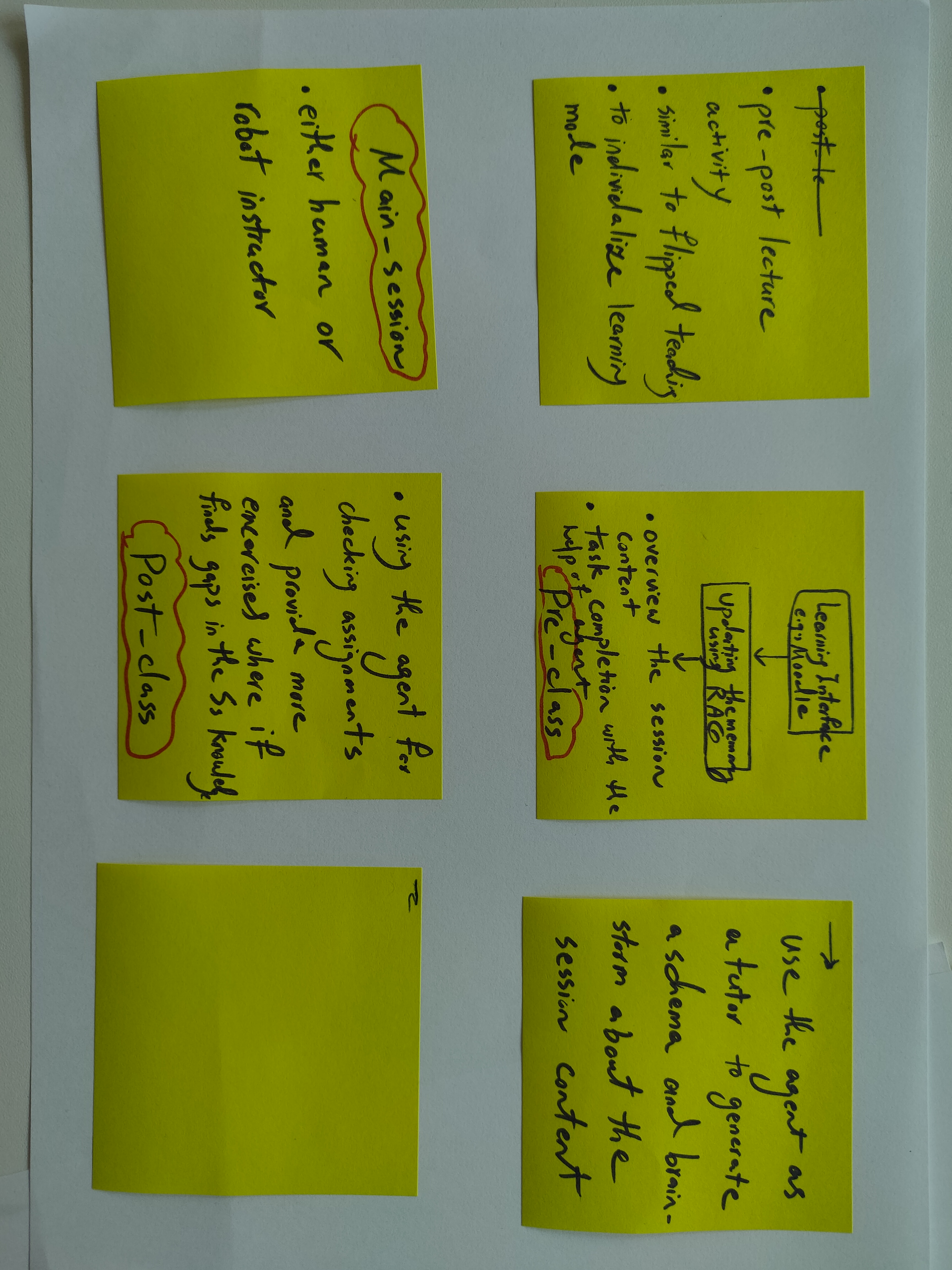
Individual storyboard 1
Individual storyboard 2
Individual storyboard 3
Individual storyboard 4
Final group storyboard
Group 2
Interaction Models, health, and user agency
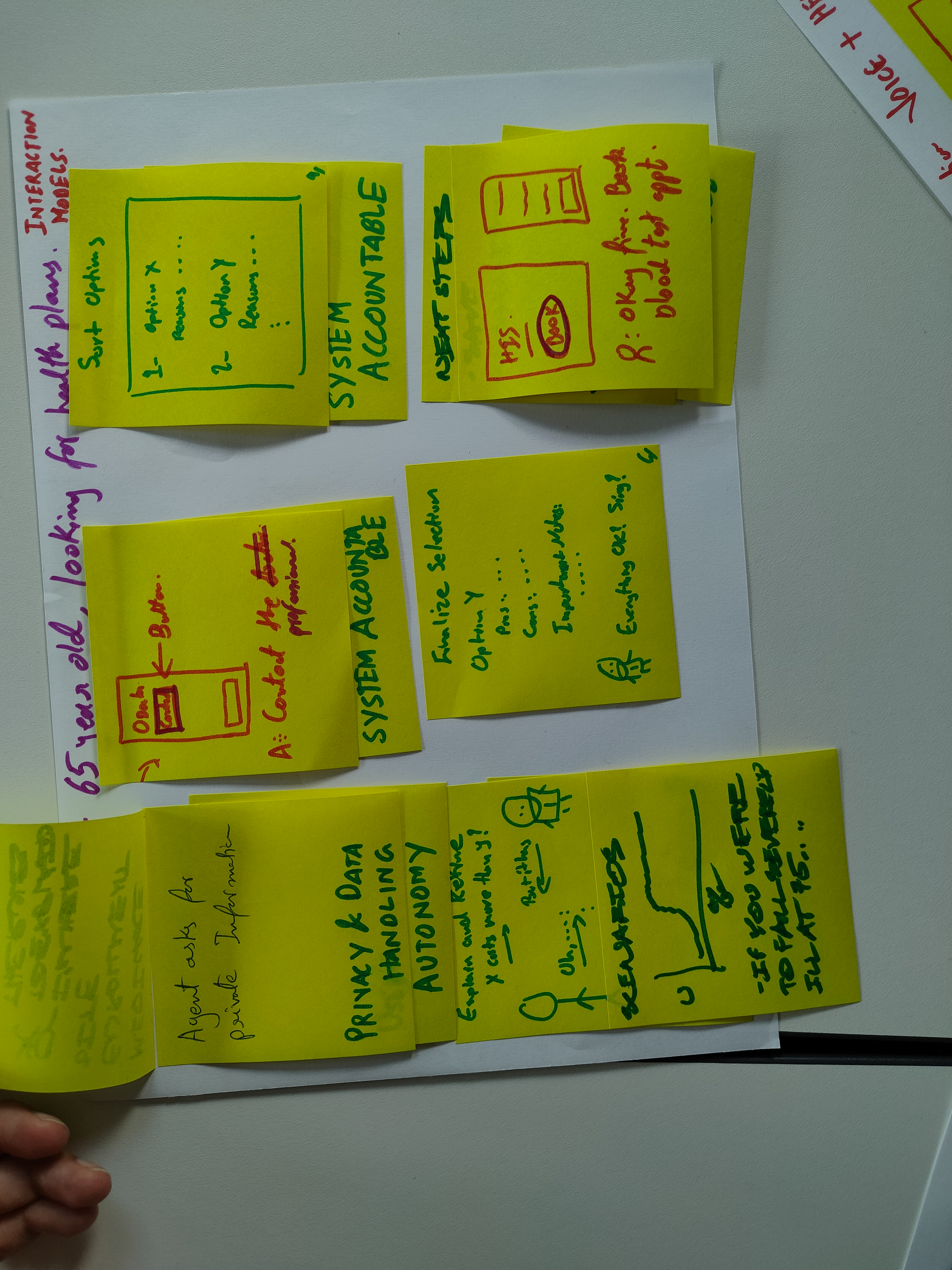
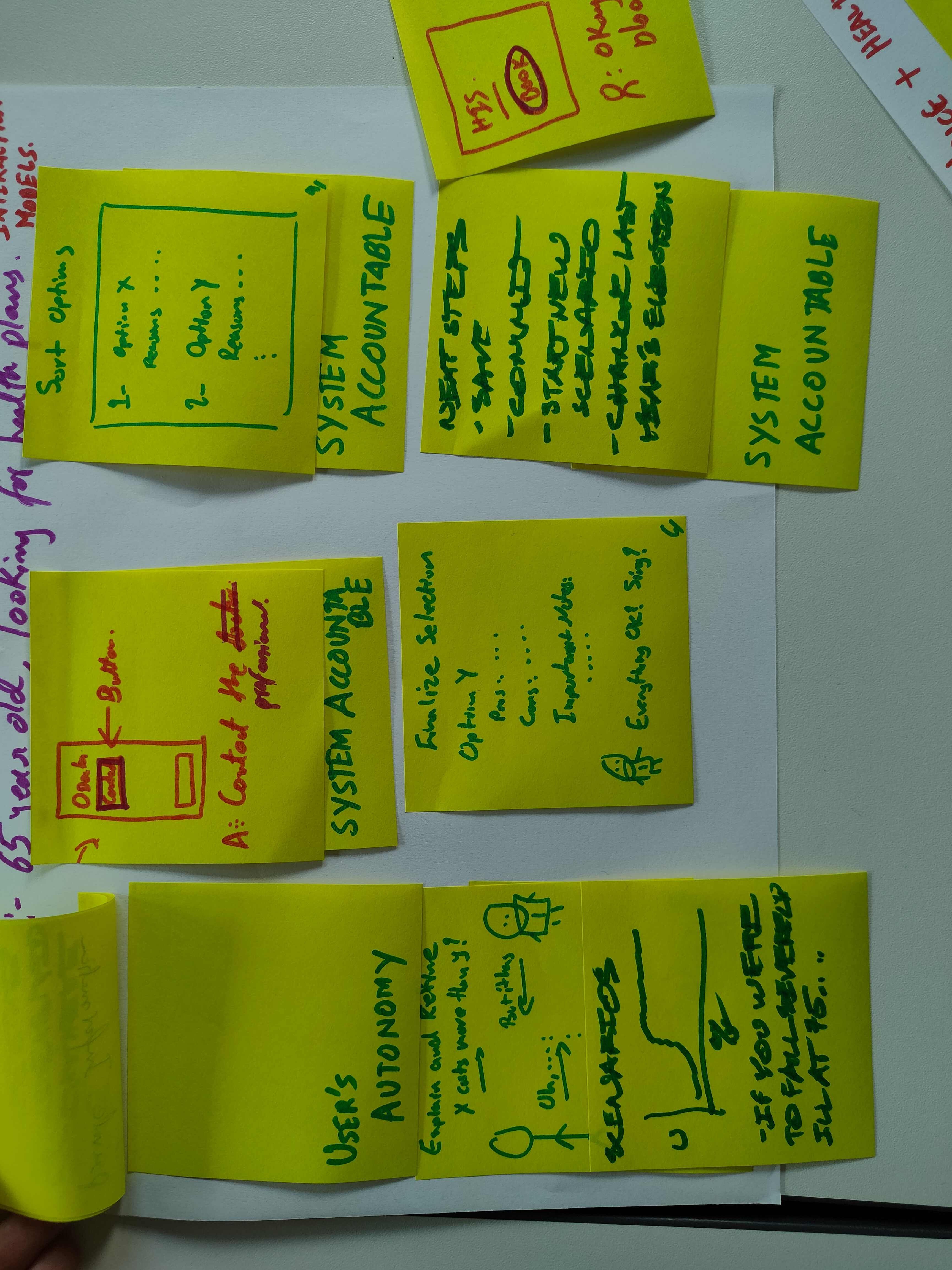
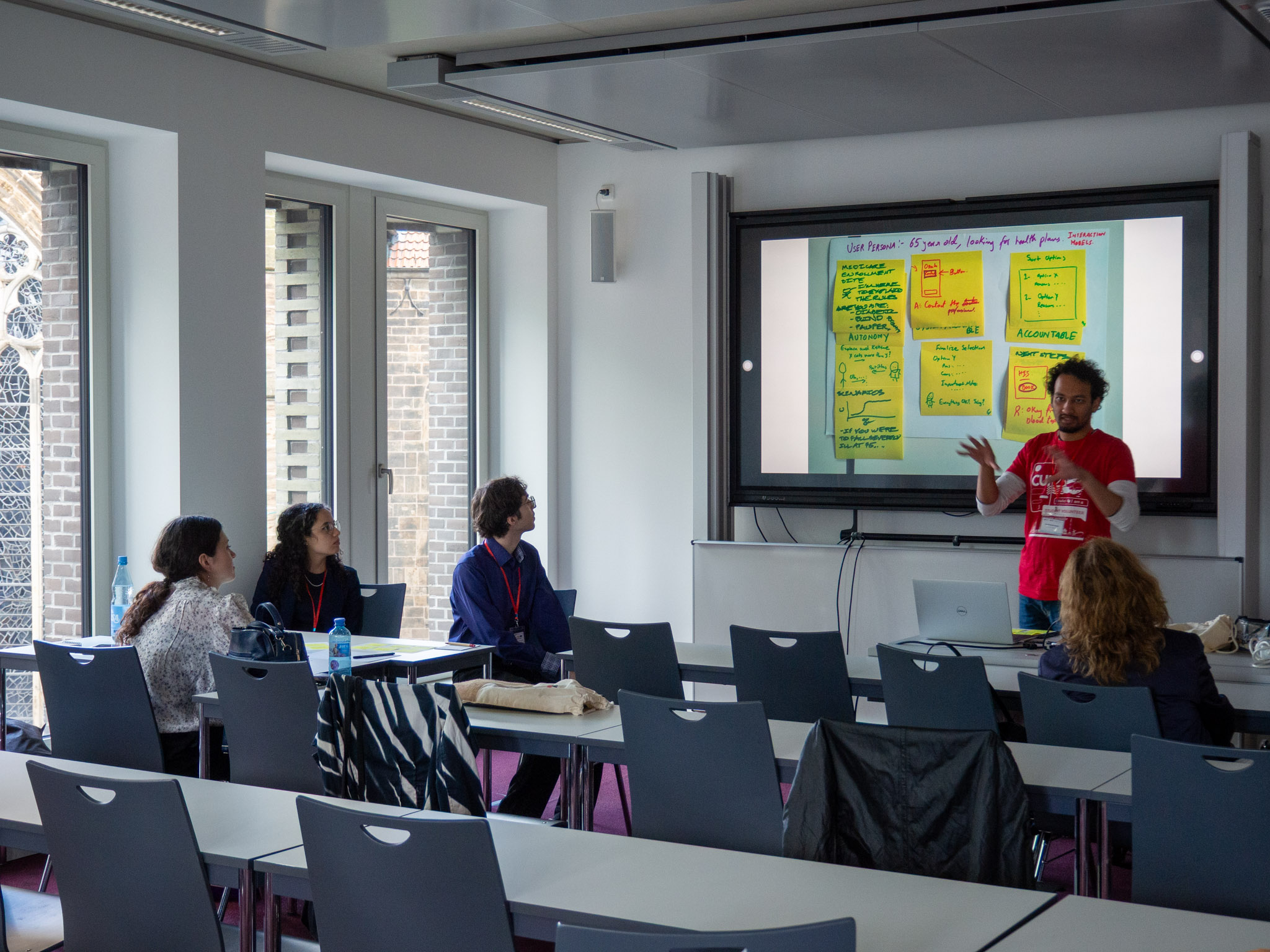
Group 2 explored the theme of "interaction models for the agentic web", contextualising it the health domain, and focusing on the challenge of user agency.
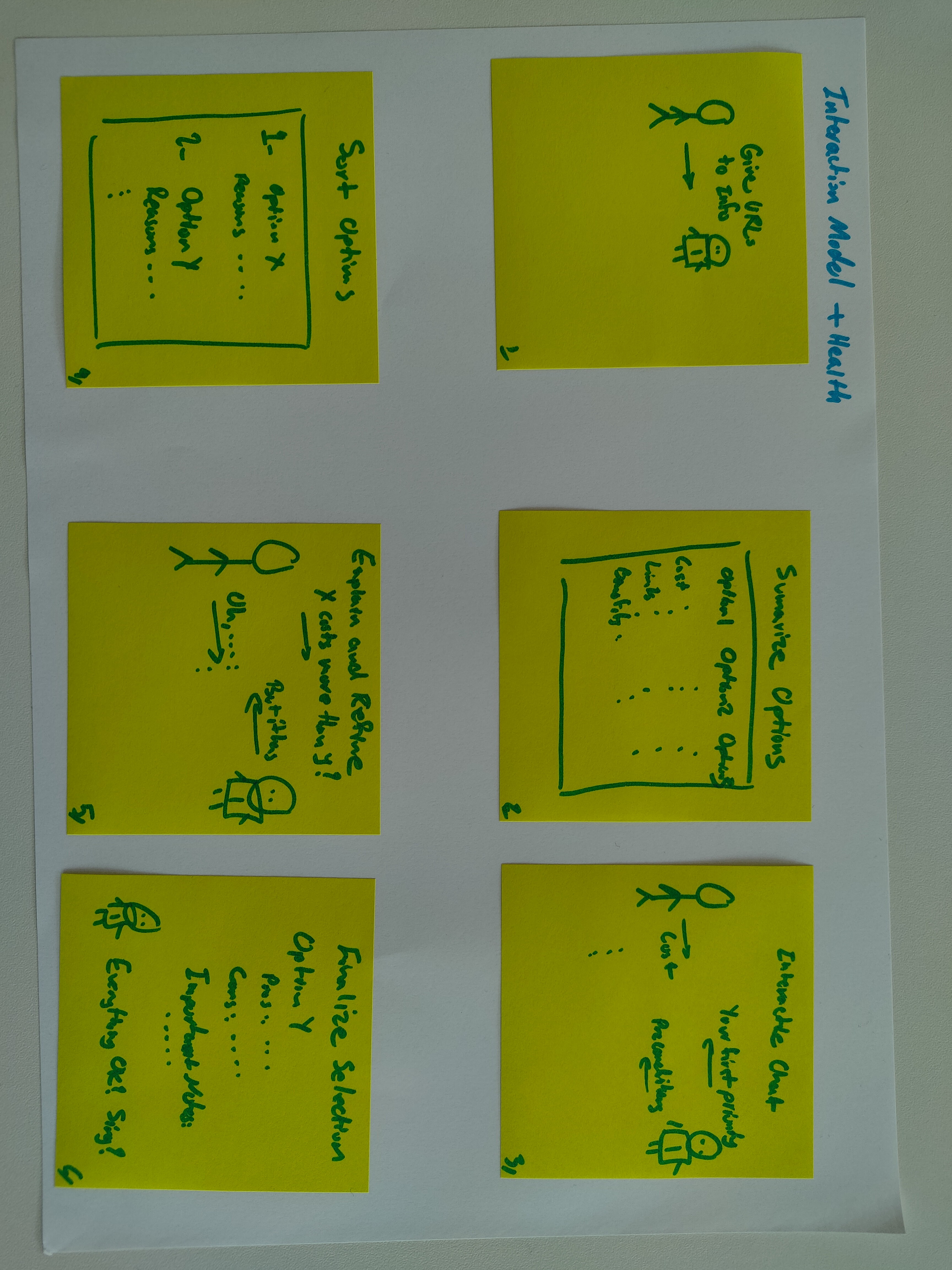
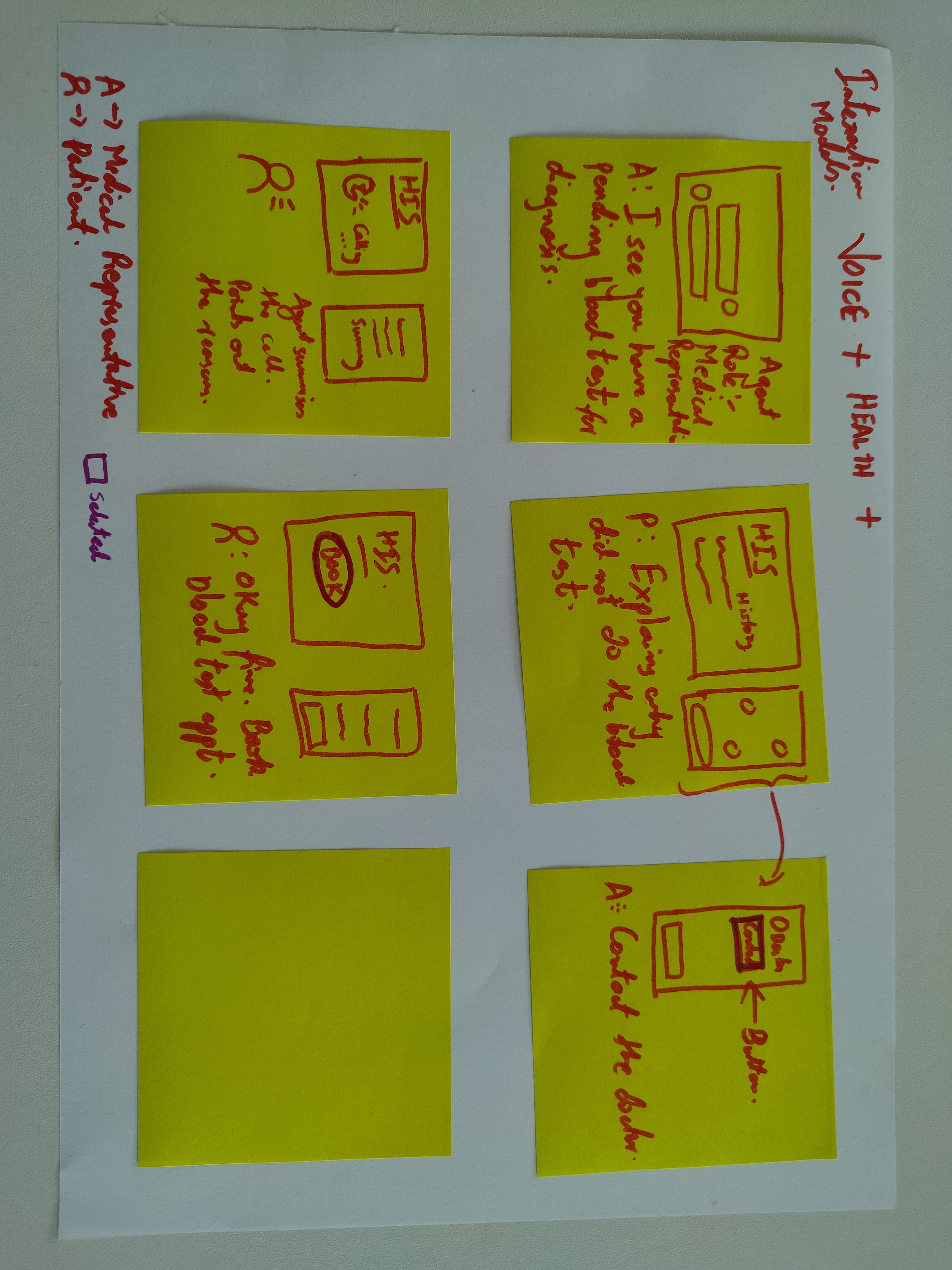
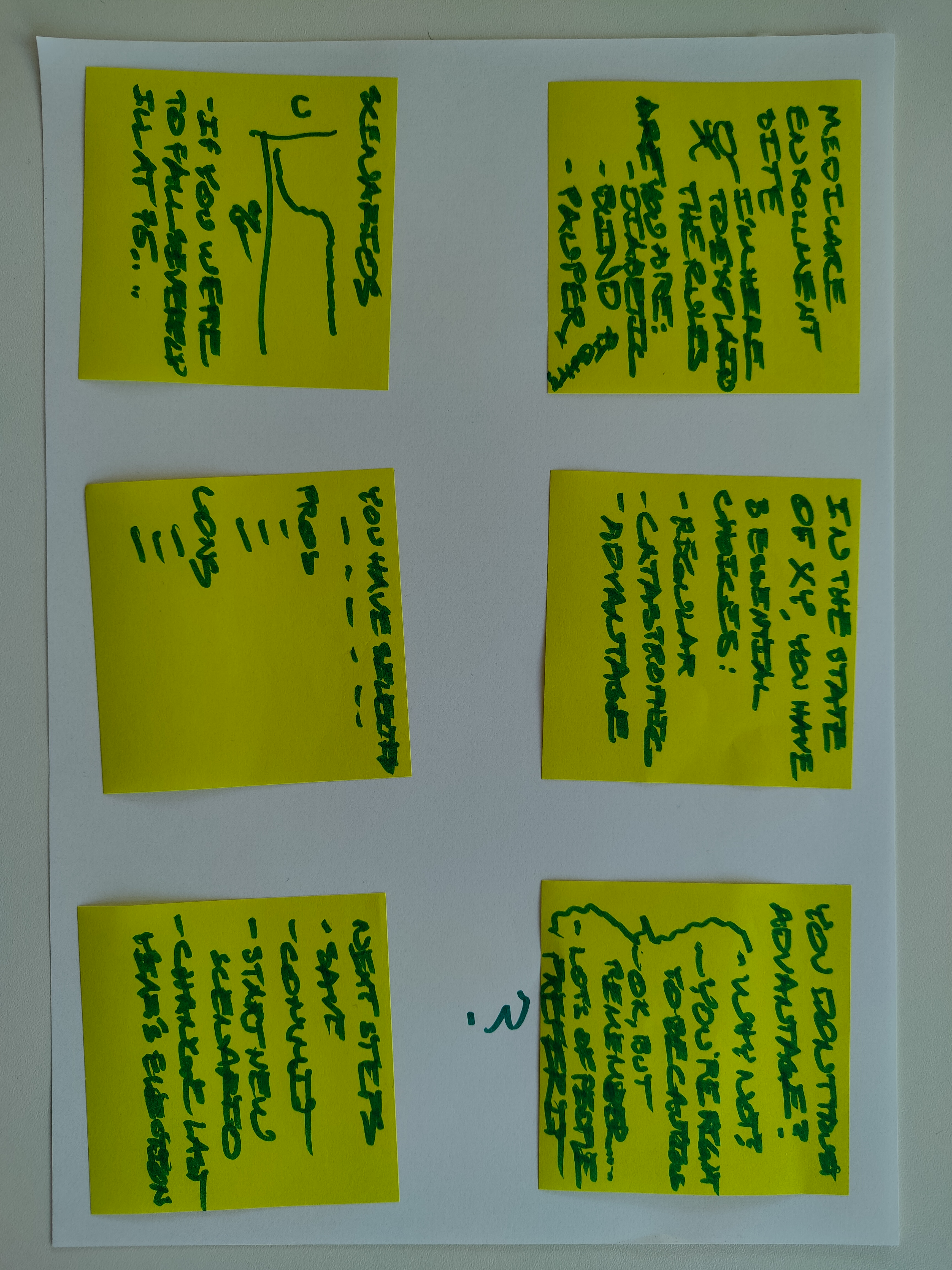
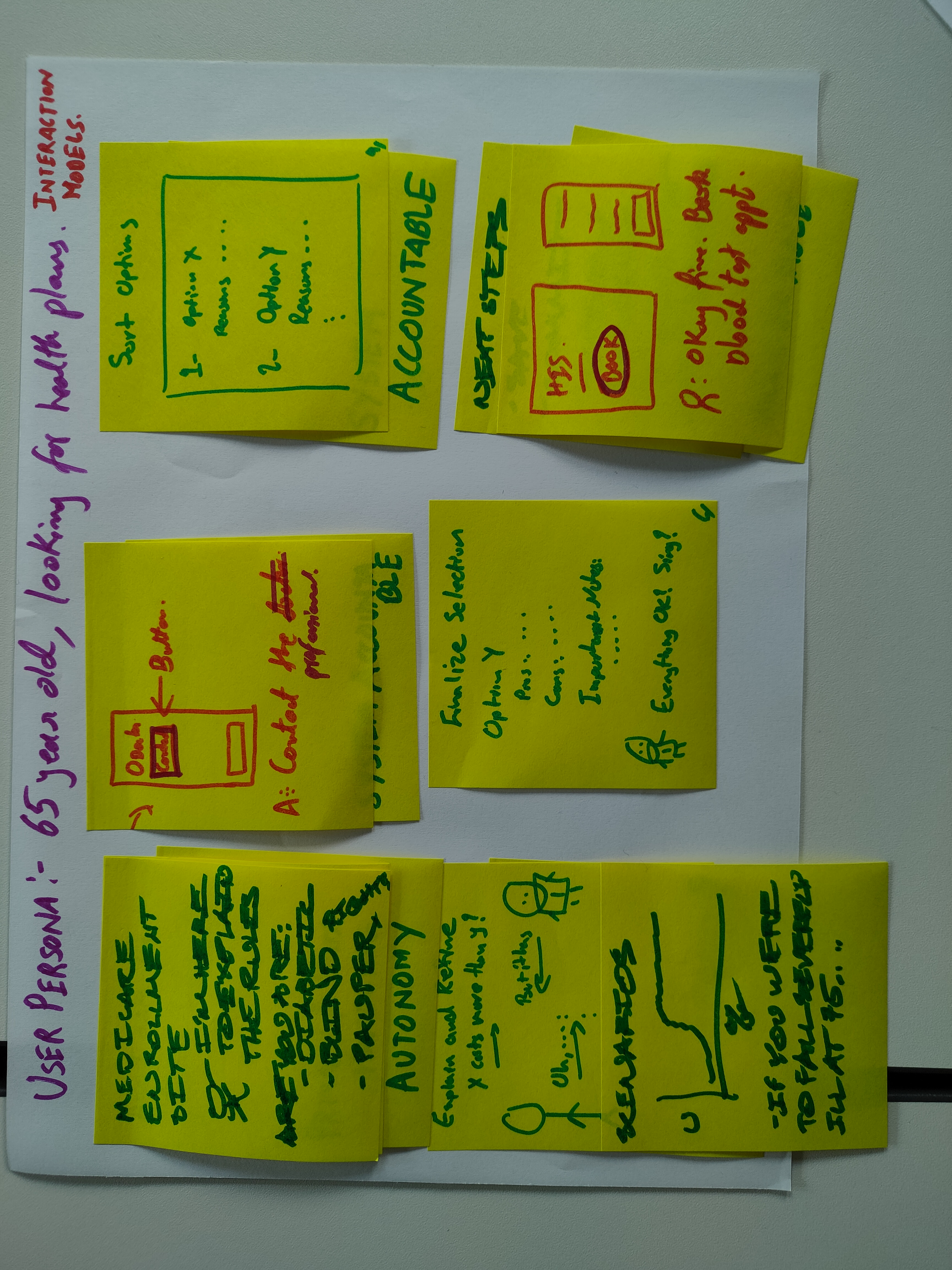
Their storyboard depicted an older user looking for an health plan. The agent provides different options and explains pros and cons, helping the user in making an informed choice, with the option of contacting a a professional to verify information. Additionally, participants highlighted the relevance of the dimensions of privacy, system accountability and user's authonomy, in the users' journey as they provide personal data to the system and make critical decision about their health plan.
Group 2 participants discussing together
Individual storyboard 1
Individual storyboard 2
Individual storyboard 3
Final storyboard
Final storyboard, detail of the first step
Final storyboard, detail of the last step
Group 3
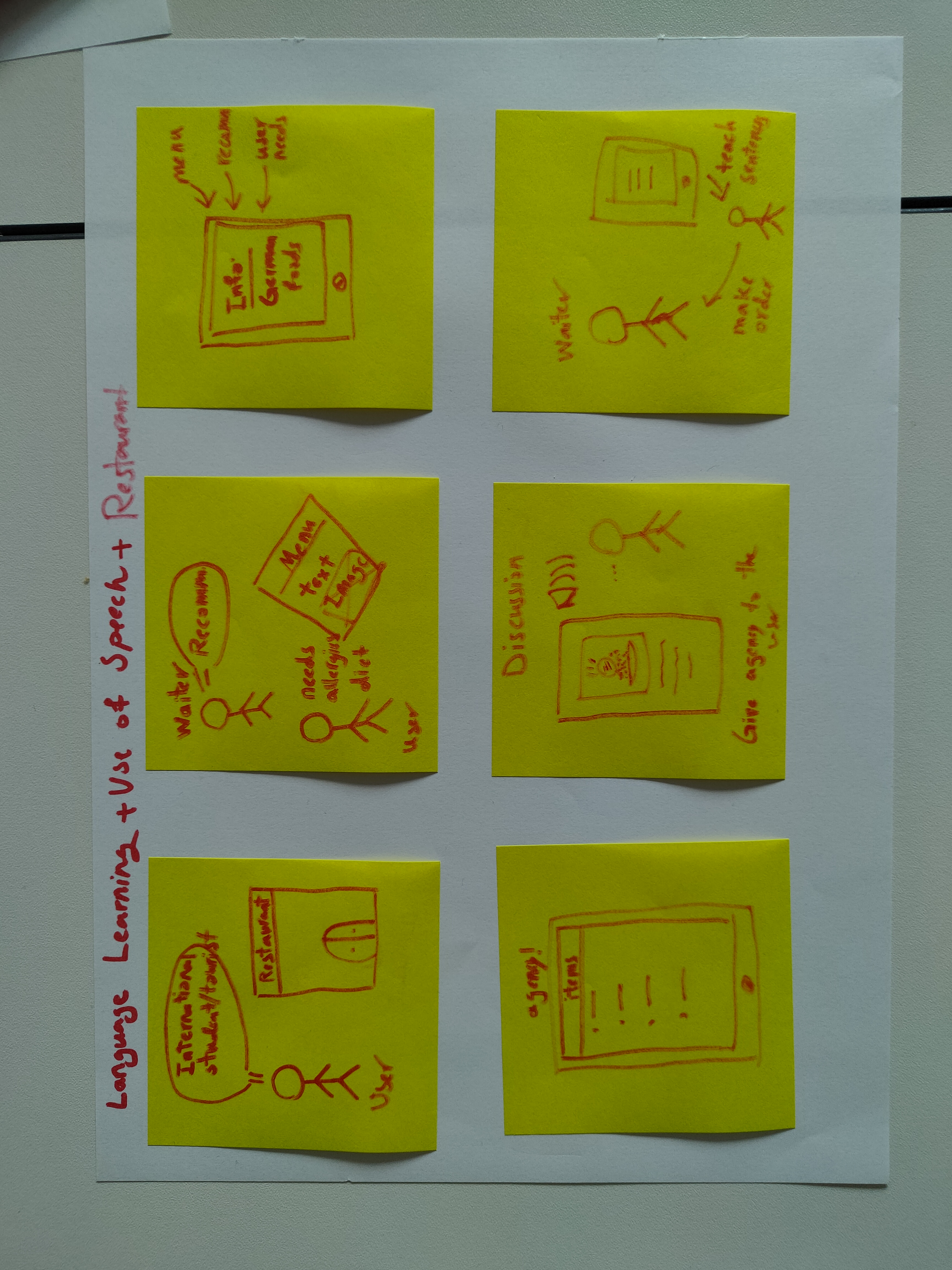
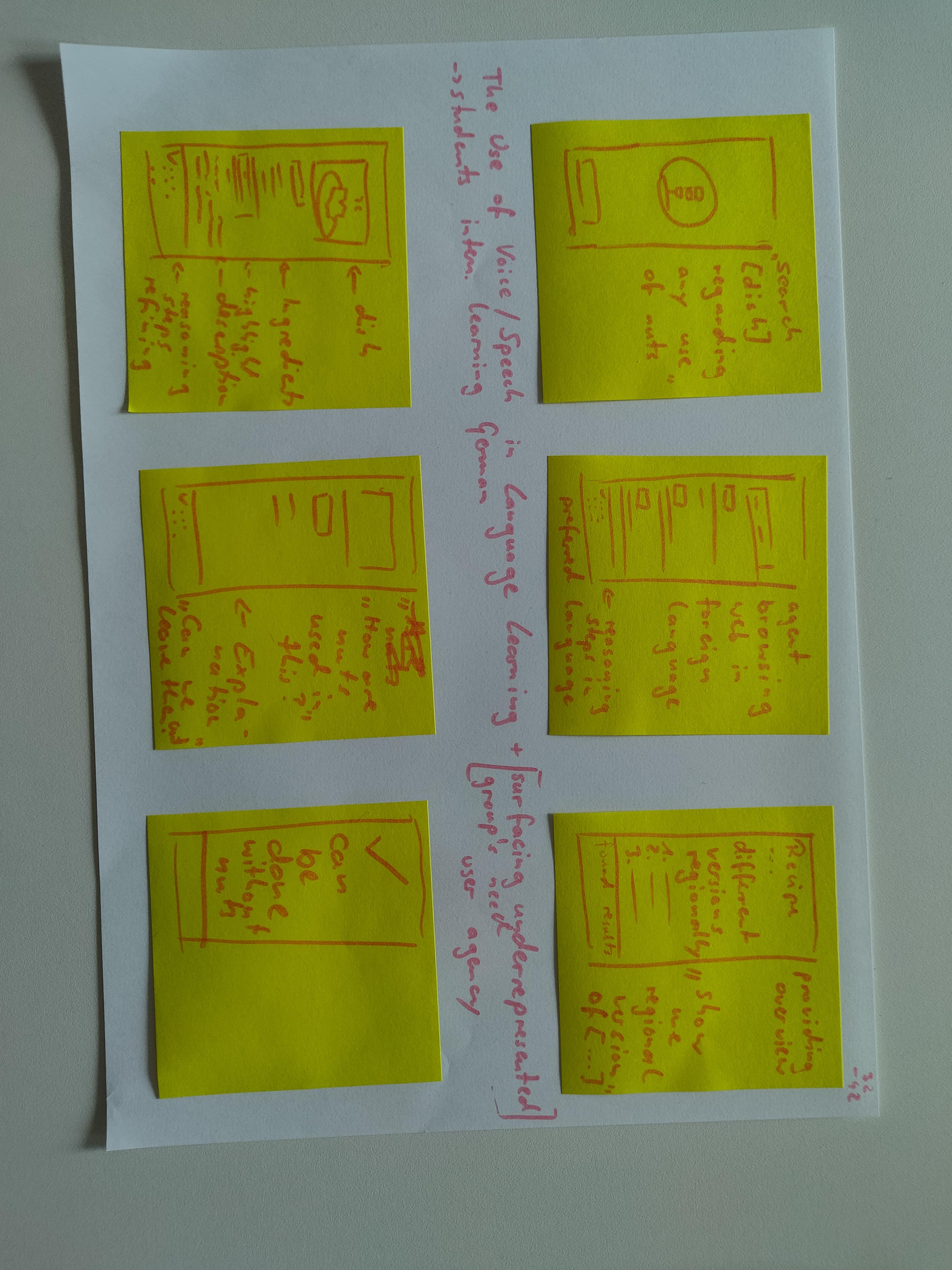
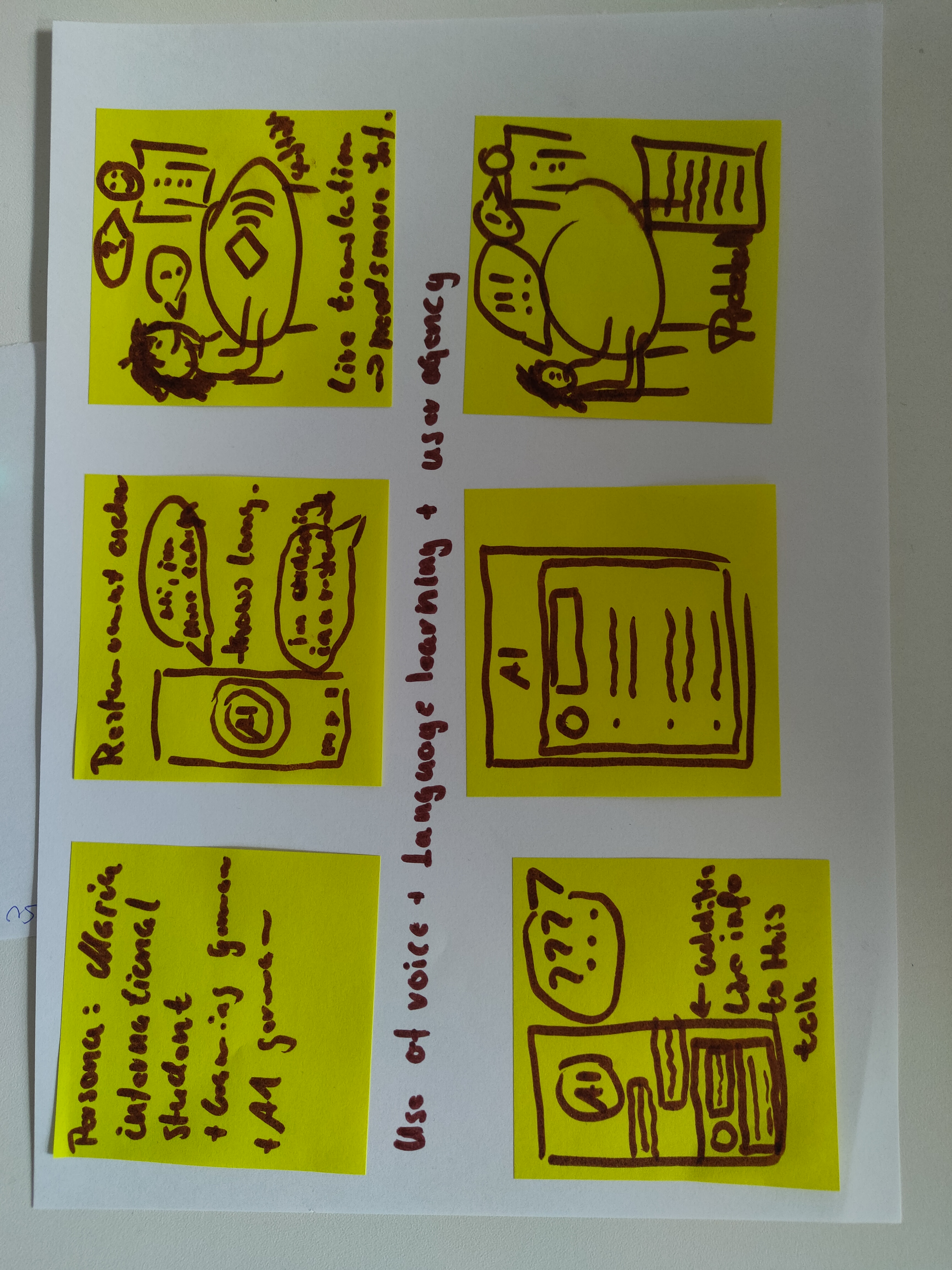
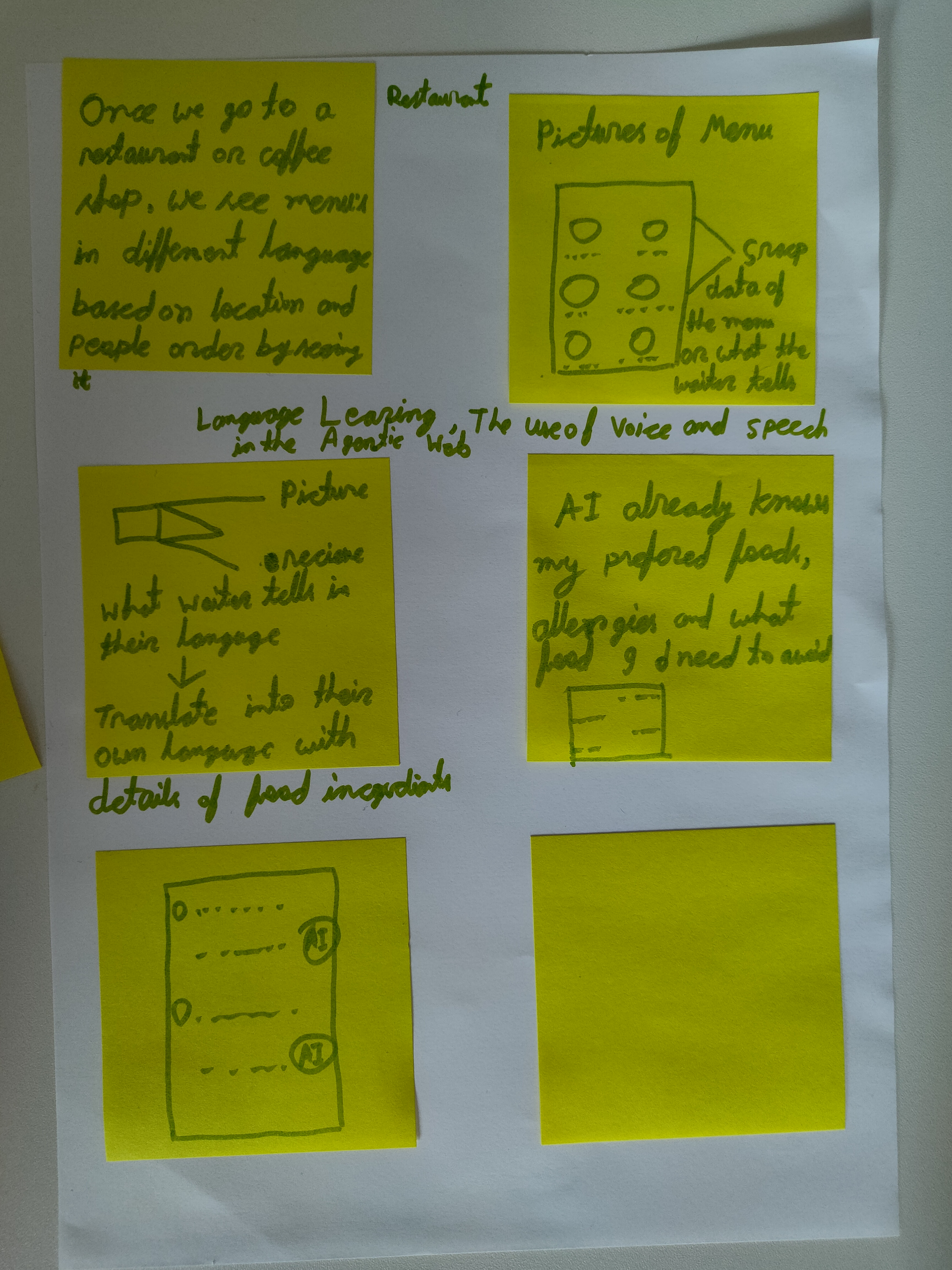
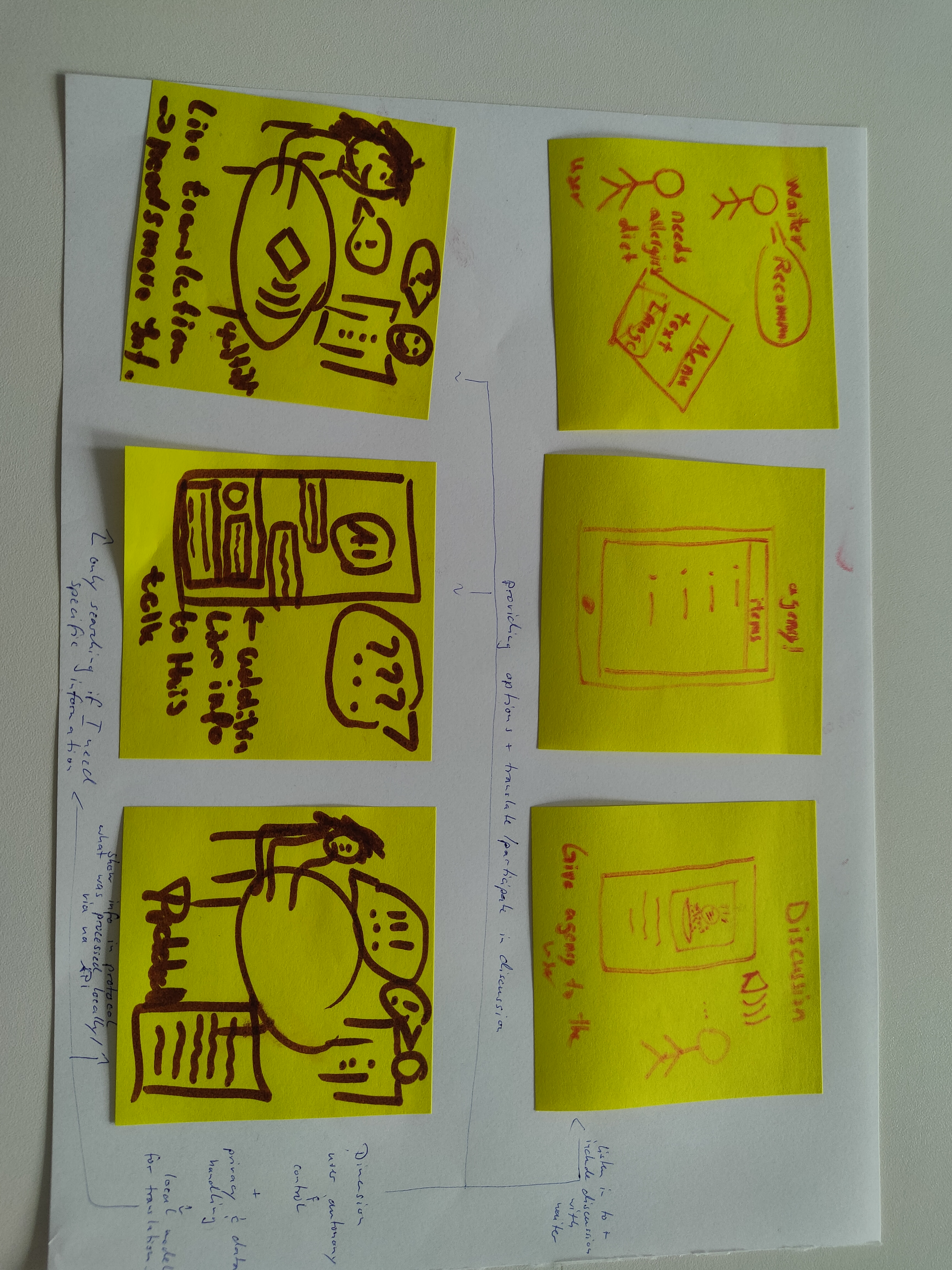
The use of voice and speech in agentic web, language learning, and user agency
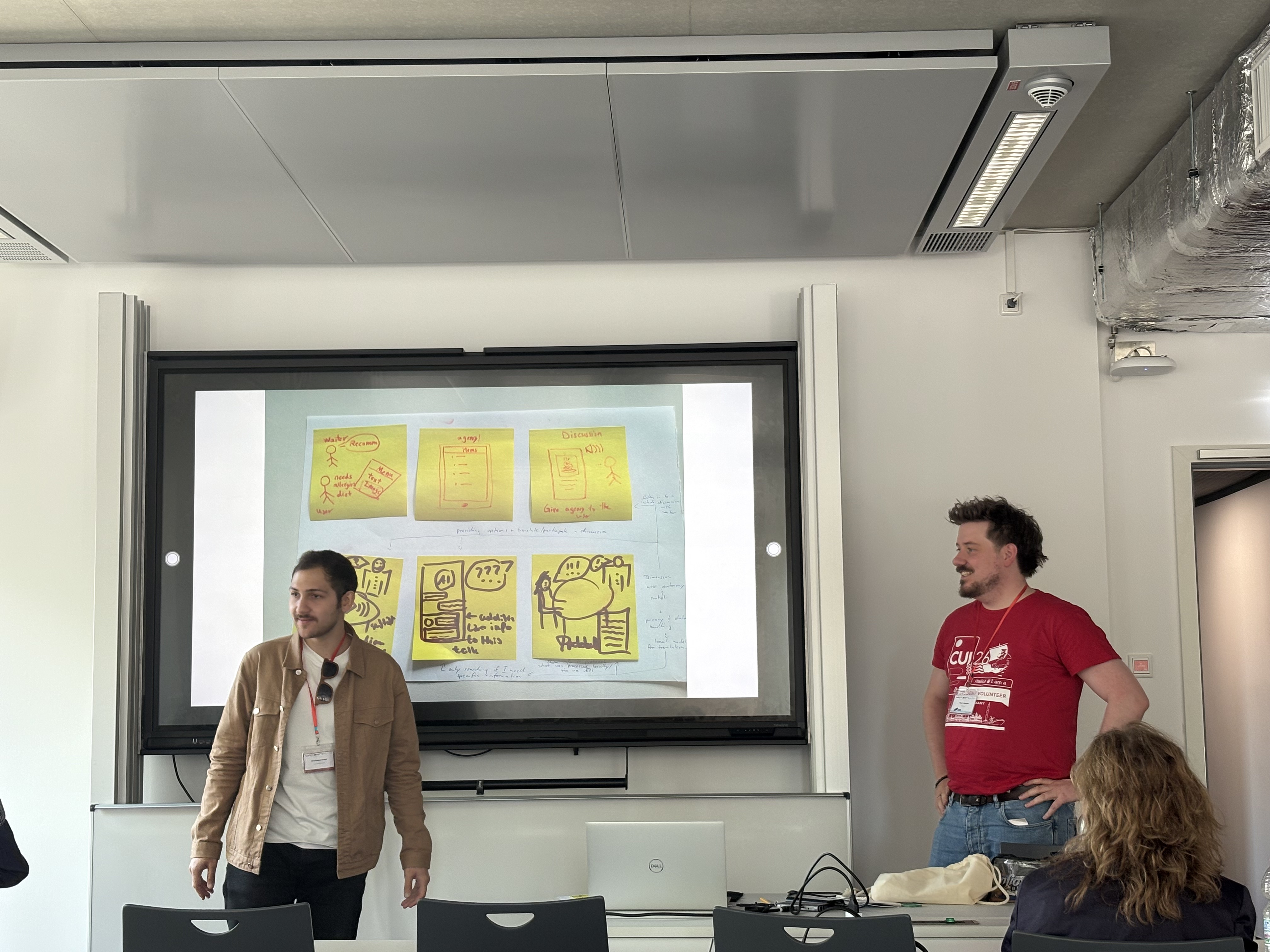
Group 3 chose to frame their storyboard around the theme "use of voice and speech in agentic web", in the context of language learning, and focusing on the challenge of user agency. They envisioned a student learning german and using a voice agent in a restaurant to provide live translation, while at the same time allowing the user to search the web for explanations of local dishes and ingredients, allowing them to understand whether a dish is suitable for their dietary restrictions or not. Reflecting on the dimensions of user control and privacy the storyboard highlights also the discretional aspects of the interaction, leaving to the user the decision to search the web or not.
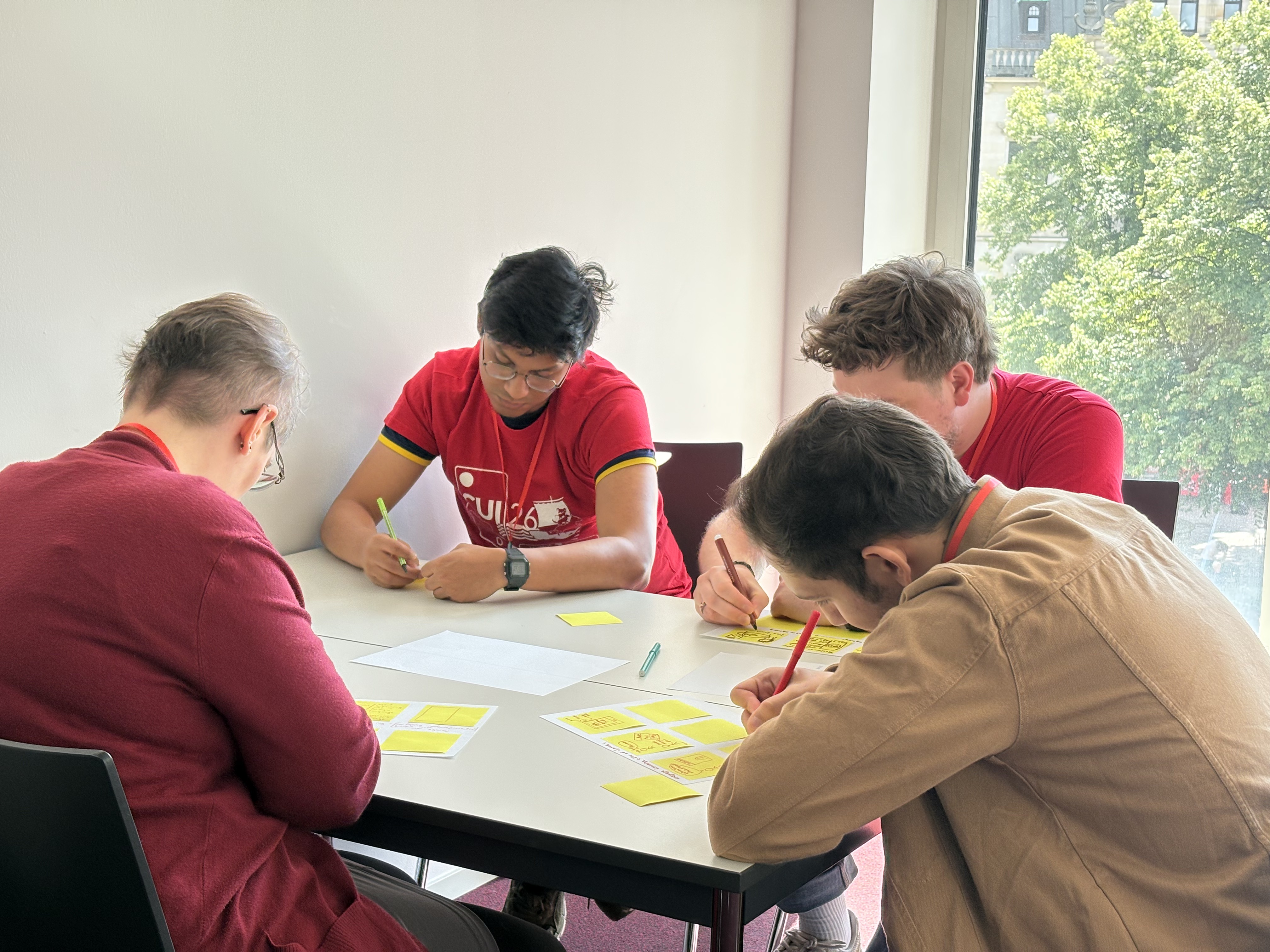
Participants working on their individual storyboards
Individual storyboard 1
Individual storyboard 2
Individual storyboard 3
Individual storyboard 4
Final group storyboard
The day in pictures
Gallery
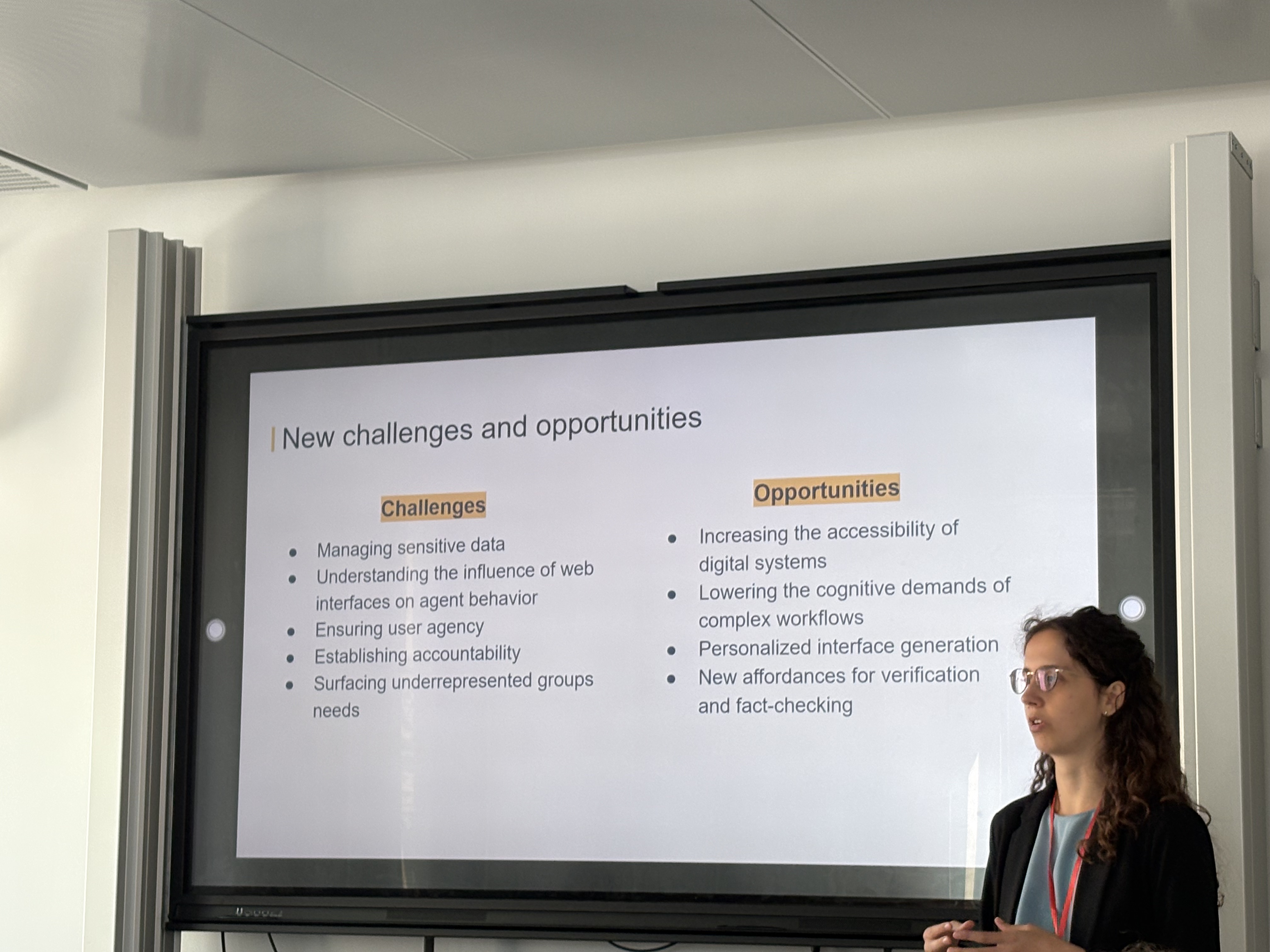
Opening presentation.
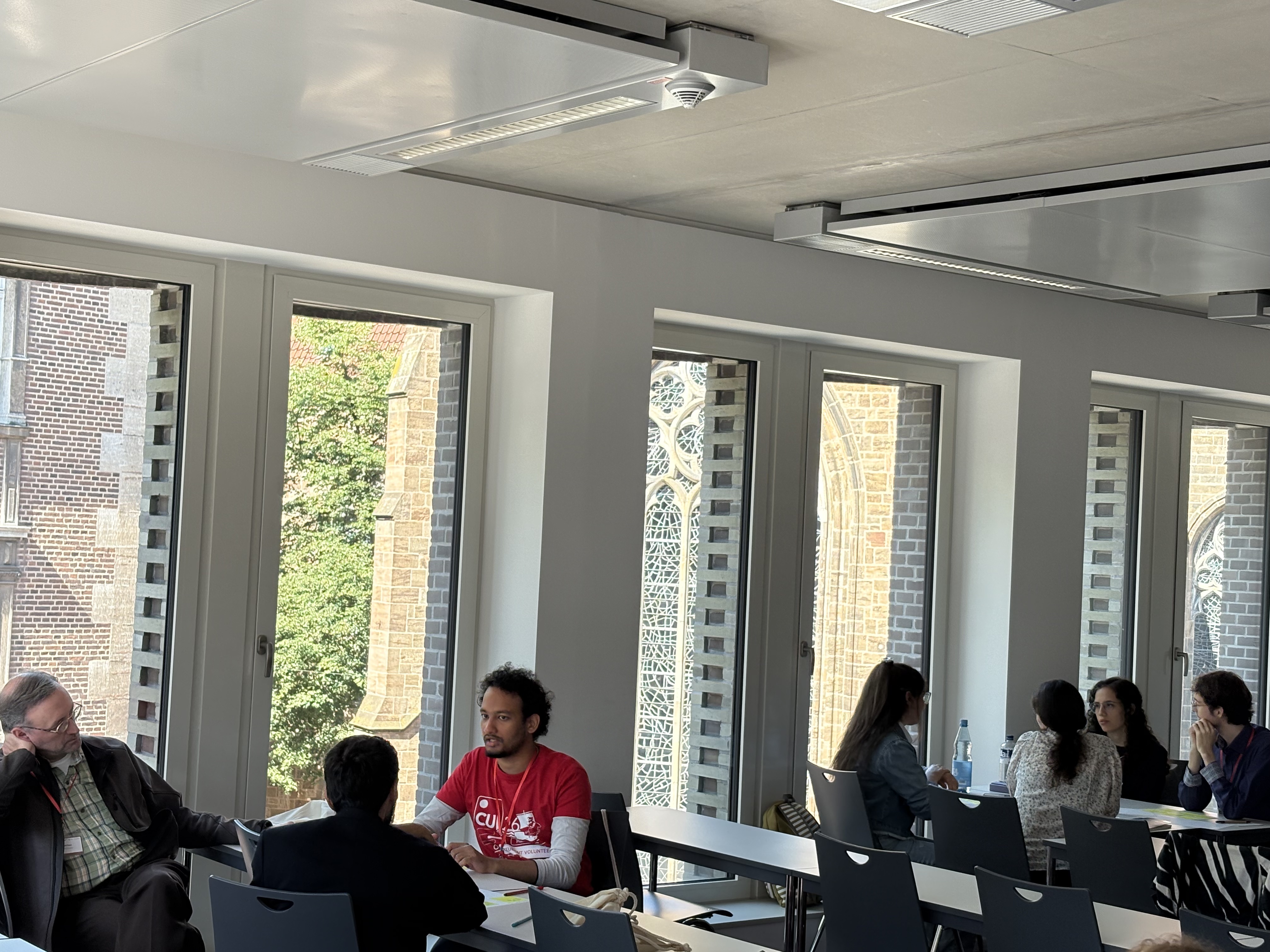
Group discussion session.
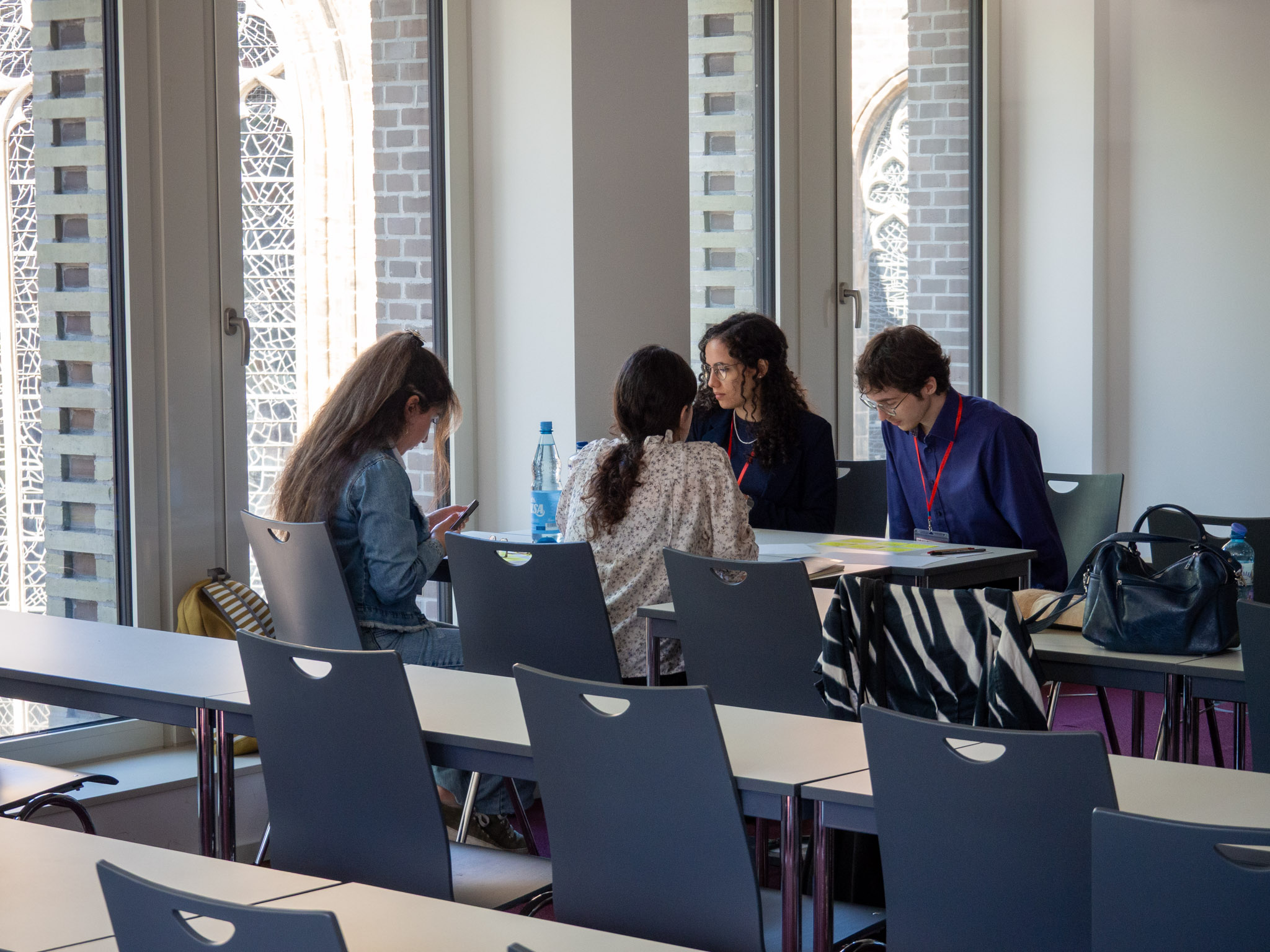
Group 1 working on their individual storyboards during the storyboarding activity.
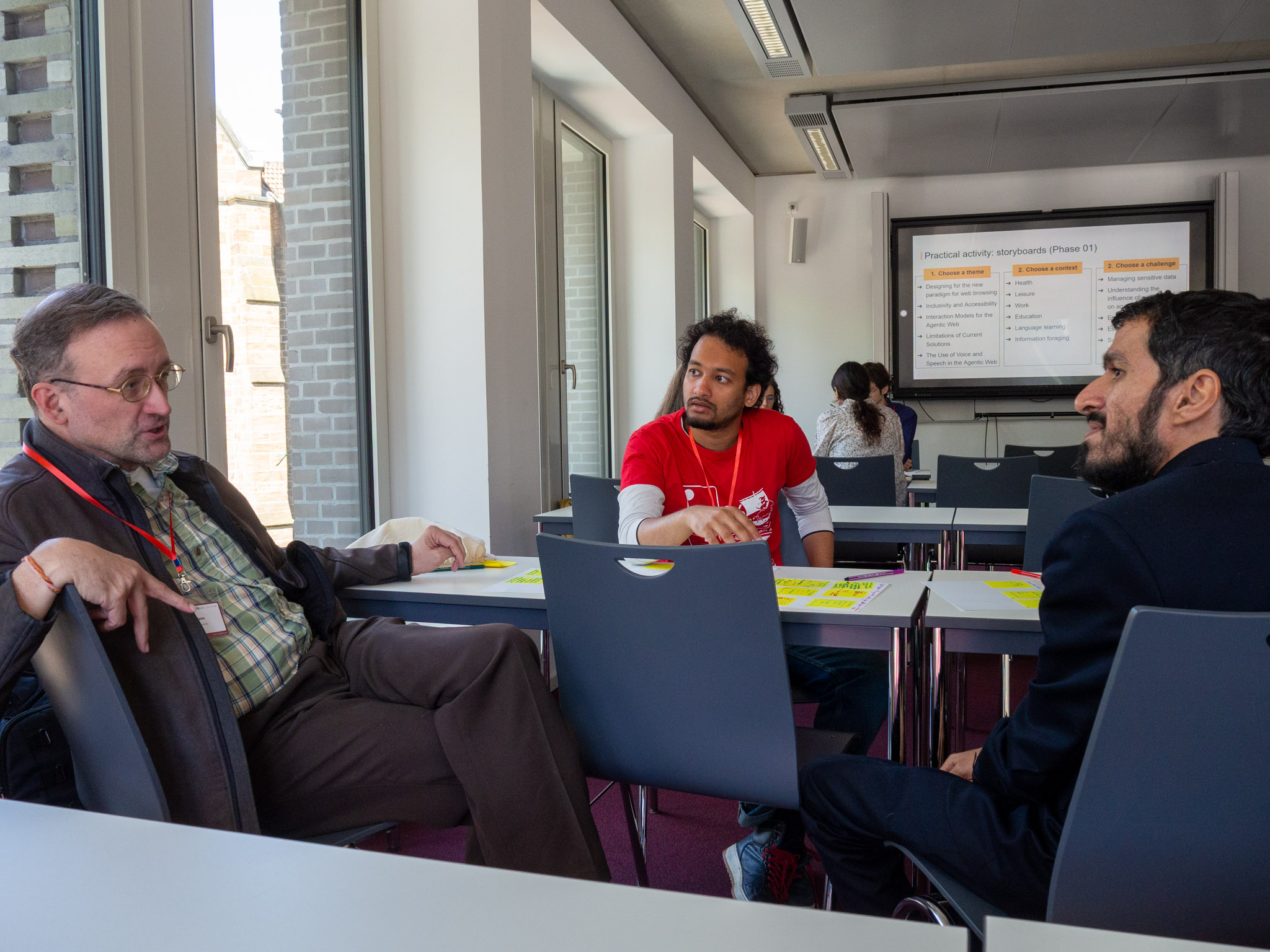
Group 2 discussing their idea during the storyboarding activity.
Group 3 discussing the storyboarding activity with one of the organizers.